 |
The 2026 Dennis Wheatley Convention |
|
The 2026 Dennis Wheatley Convention |
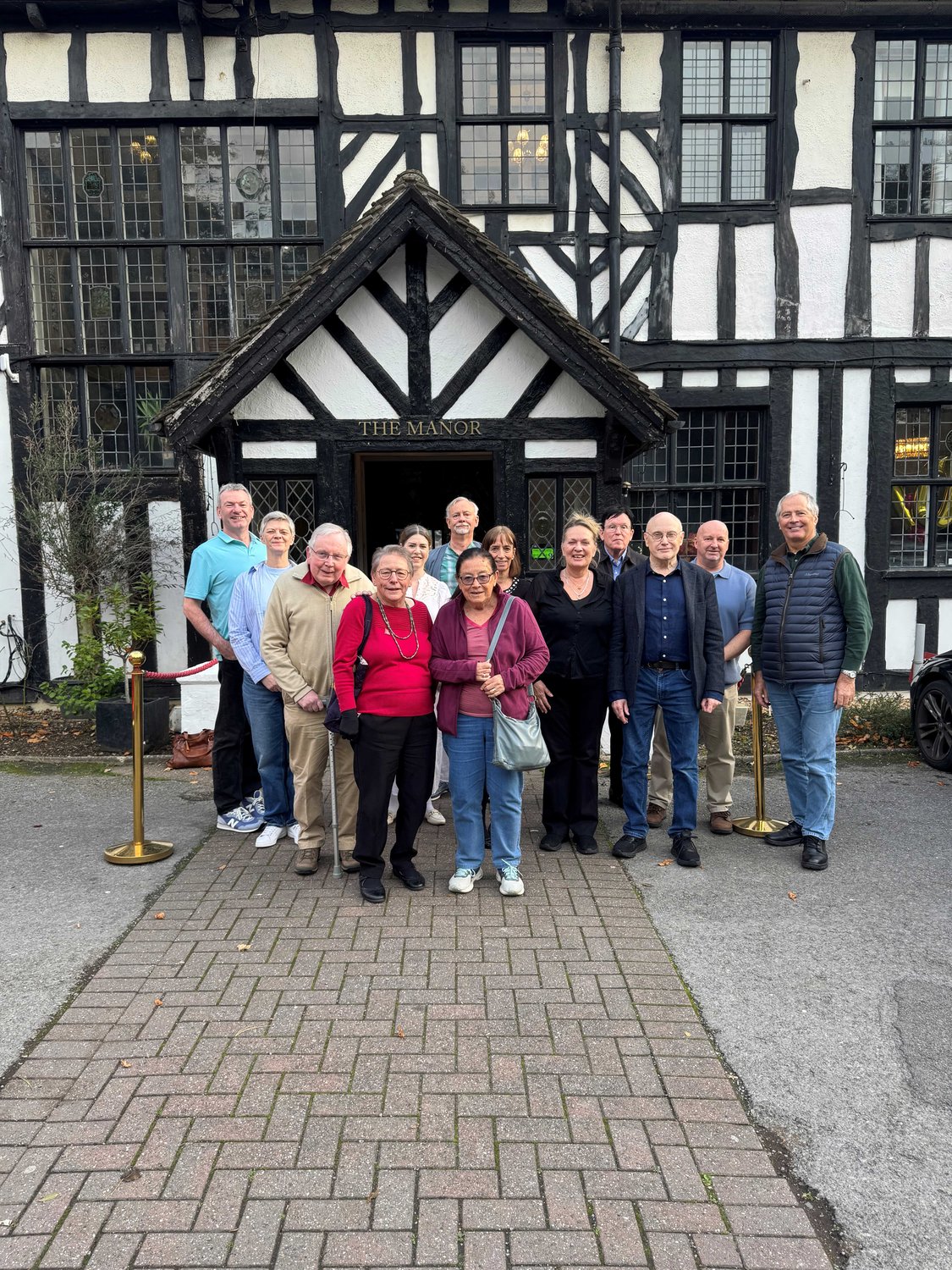 |
Attendees and friends (left to right: Ken G, Mary, Ken C, Viv, Susie, Steve, Jean, Anna, Jo (Front of House Manager), Franklin, Charles, Darren, Keith) Click on the image to enlarge |
The nineteenth Dennis Wheatley Convention took place on 6-7 November at The Manor Elstree, the venue for our twelve pre-Covid Conventions. It was excellent to be back, and our thanks go to all (and especially to Jo, Carolynne and Alex) who helped make our stay so memorable.
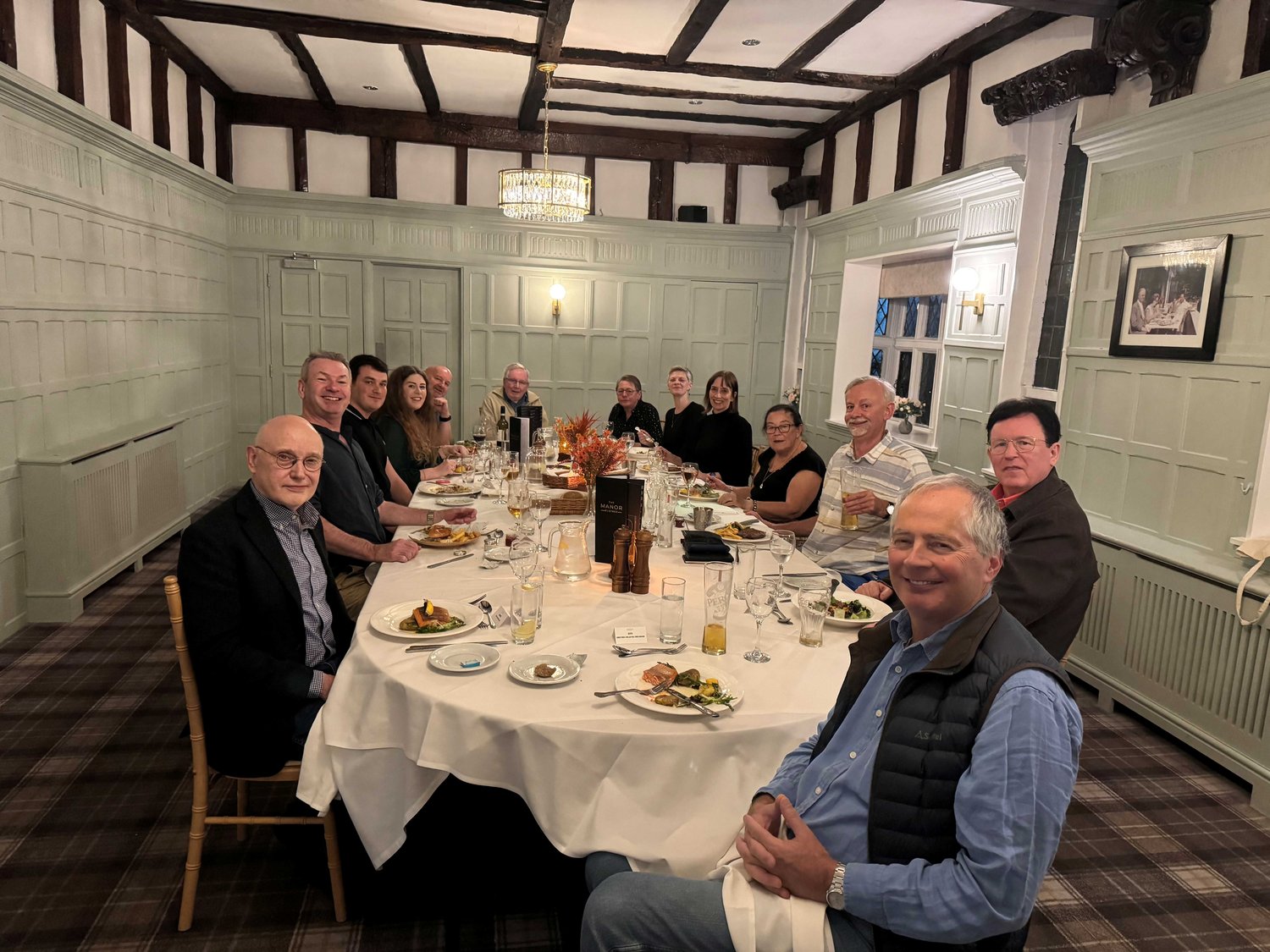
Dinner on the Friday night
Click on the image to enlarge
The group assembled in the bar late on the Friday evening, and had the pleasure of meeting for the first time one attendee's partner, who made a most welcome addition to our number at mealtimes.
At the end of the meal, toasts were given to DW and the late Bob Rothwell (Ken C), Absent Friends (Keith) and Us (Susie). It was such a jolly evening that we broke up far later than I was expecting - time literally flew by.
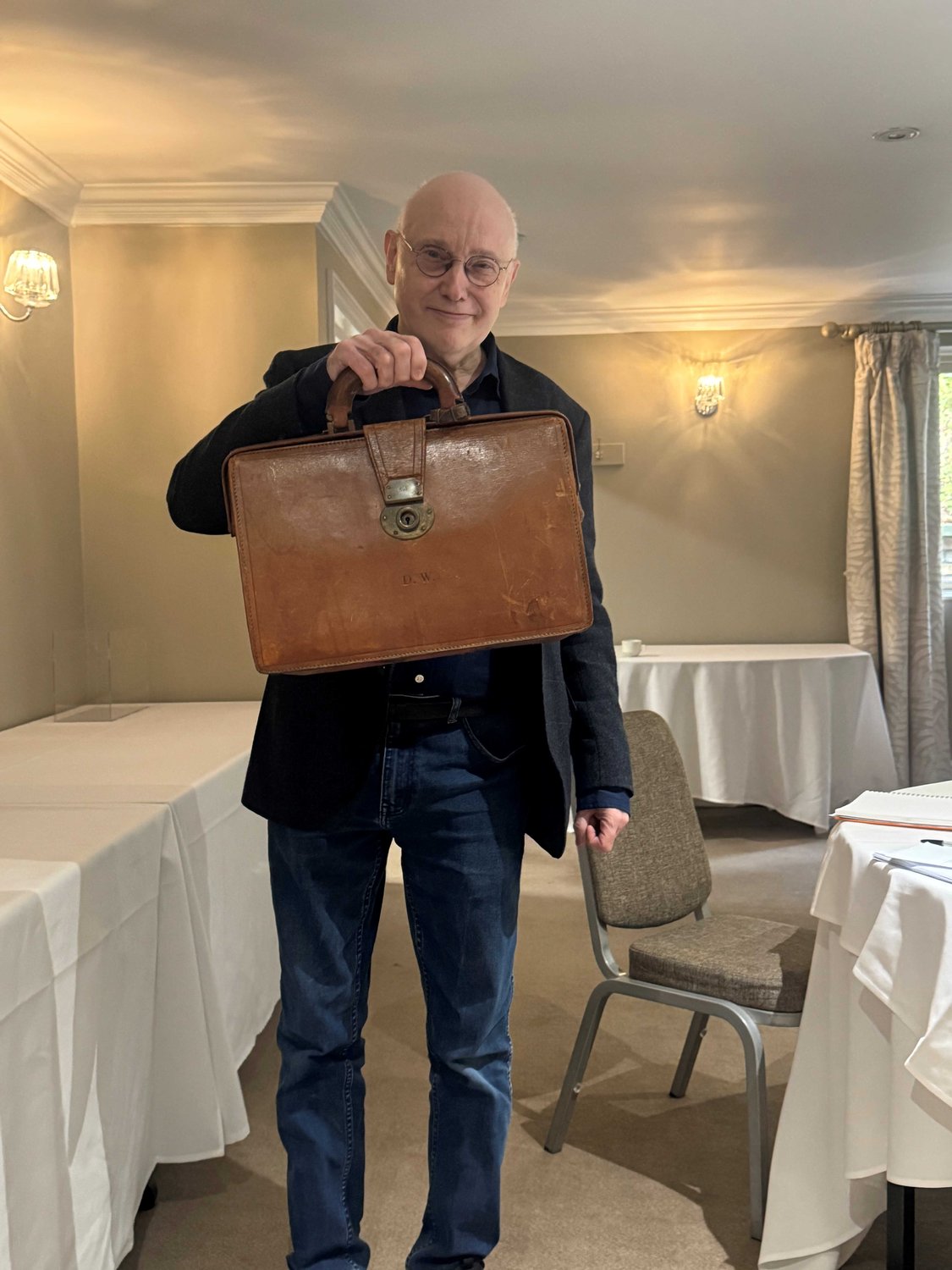
Charles brings in the programmes in DW's briefcase and opens the Convention
Click on the image to enlarge
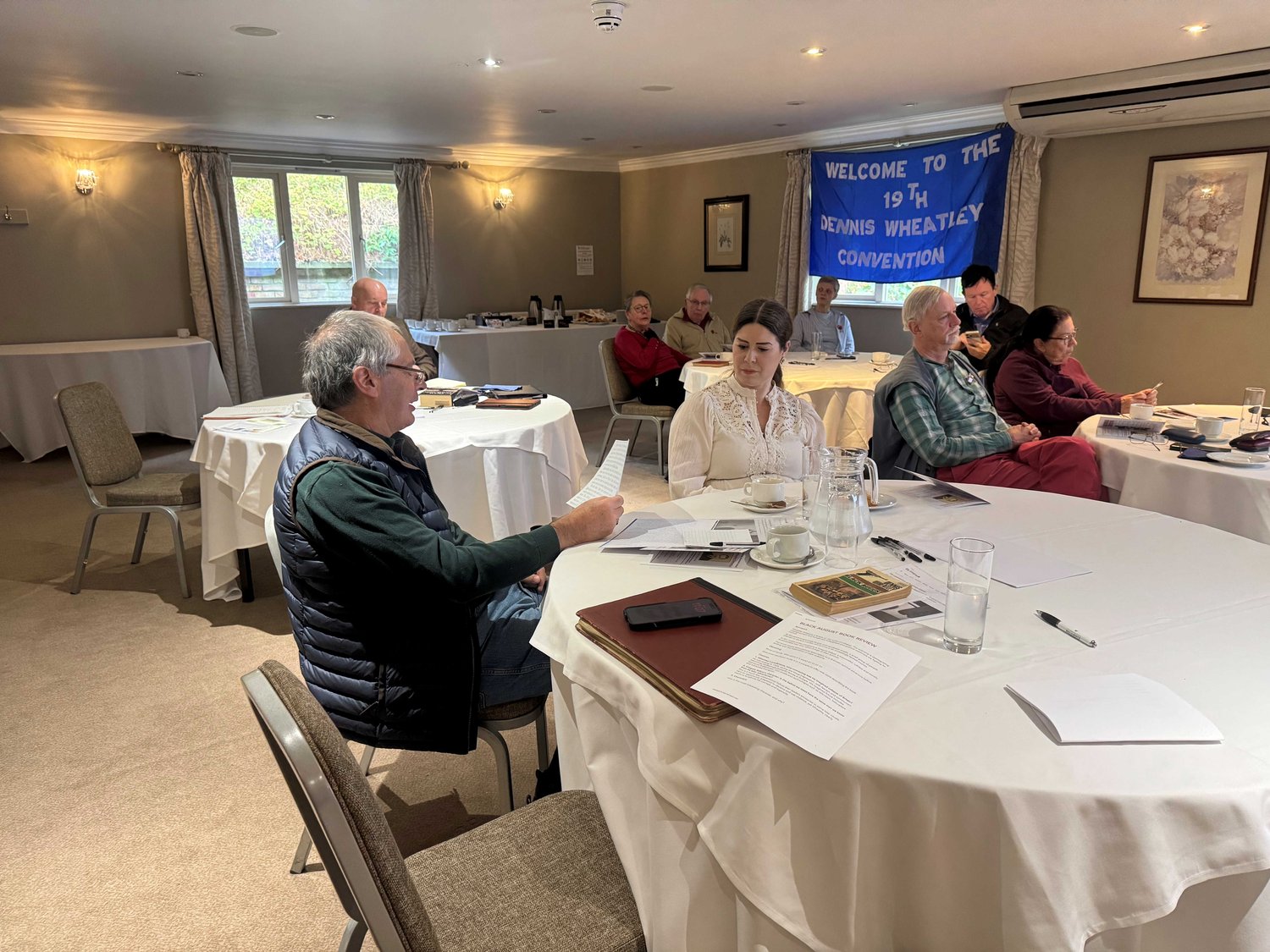
And participants with Ken G's celebratory banner in the background
Click on the image to enlarge
On the Saturday morning, the group assembled in the Aldenham Room - which Jean reminded me was the venue for our very first Convention. To music selected by Darren (appropriately The Soundtrack for the Novel The Devil Rides Out by Tom McDowell) Charles brought in the programmes in DW's briefcase as custom demanded, and said a few words of welcome. We then admired Ken G's banner and Darren's programme - which was as usual far more than just a programme.
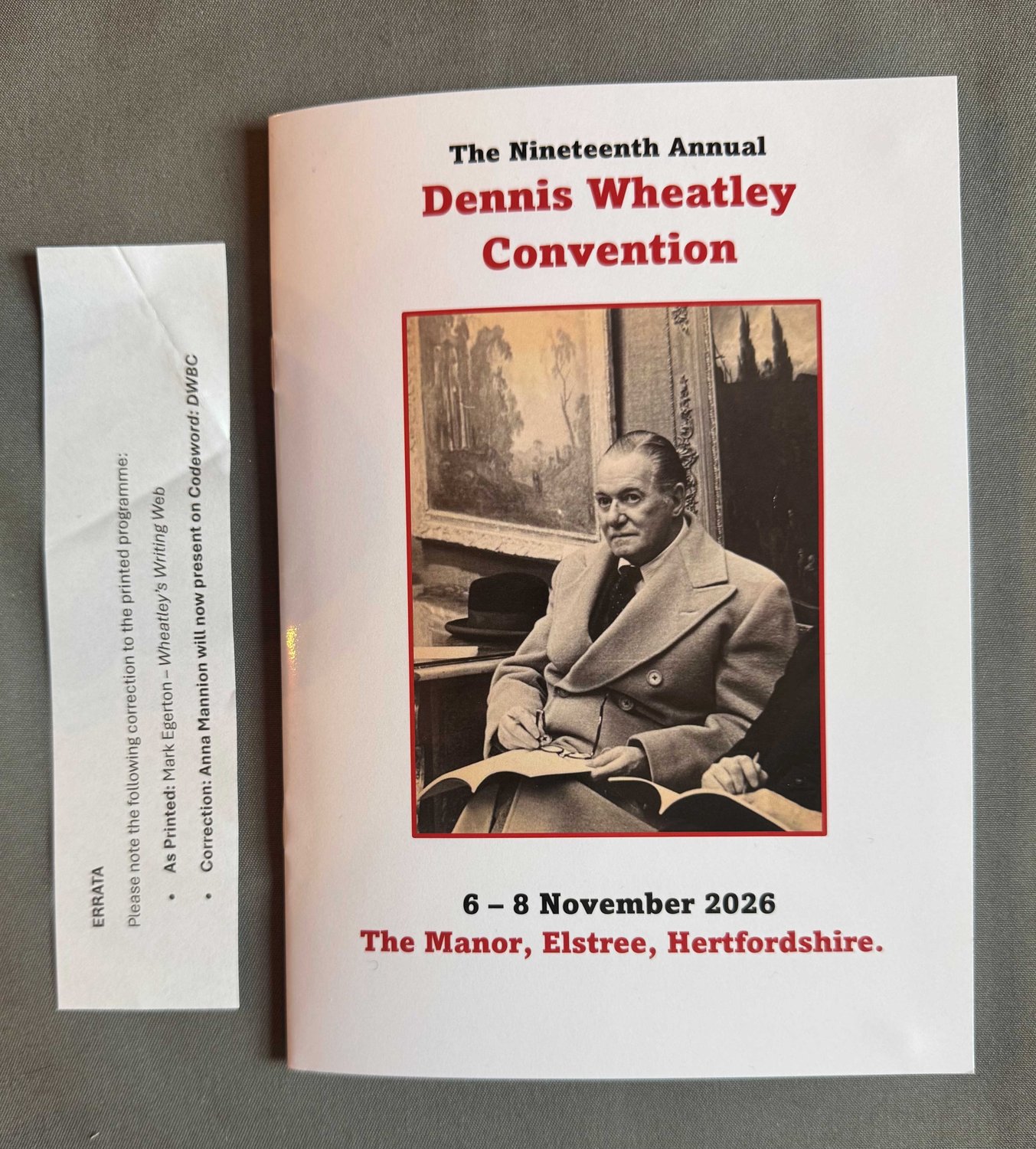
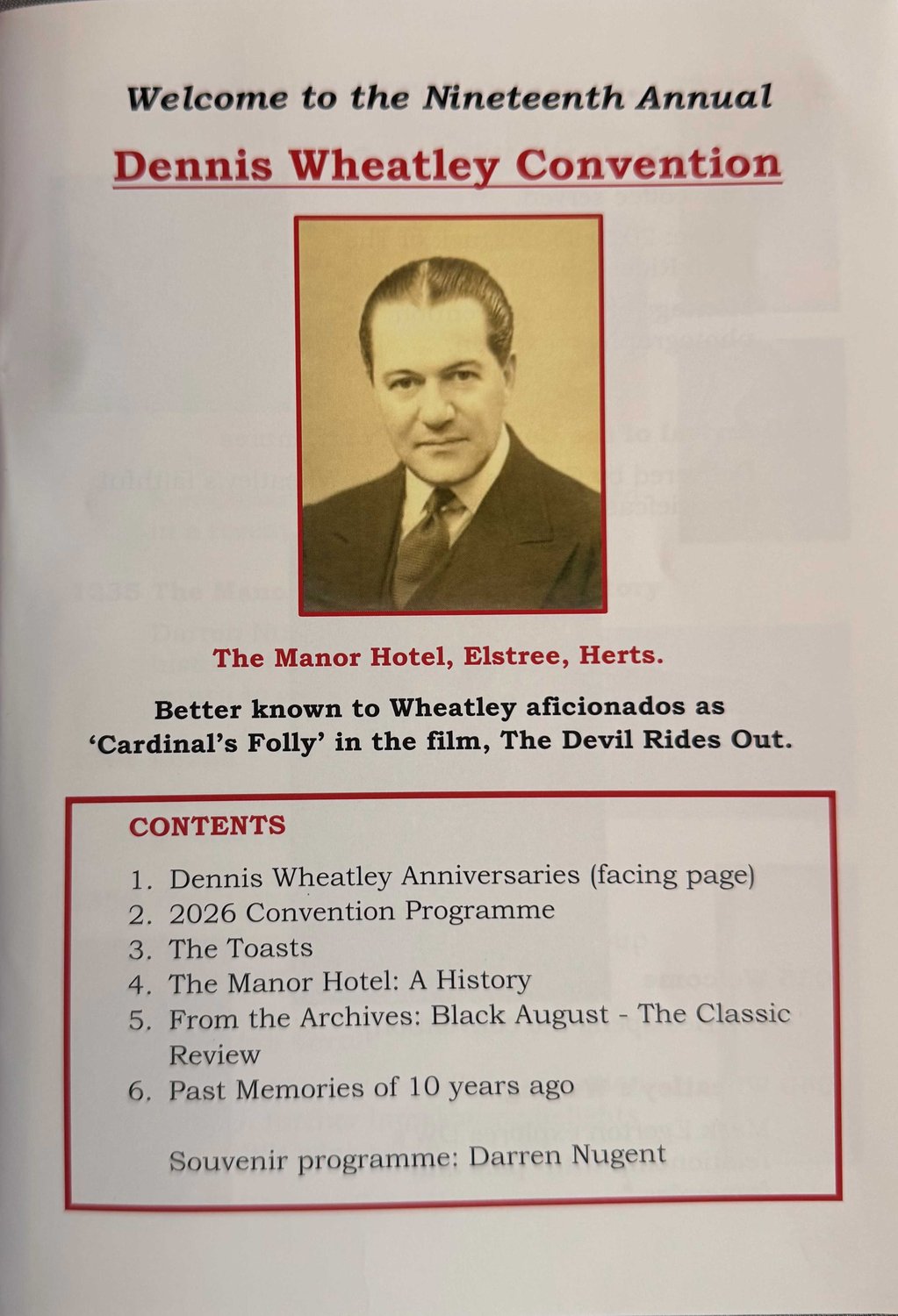
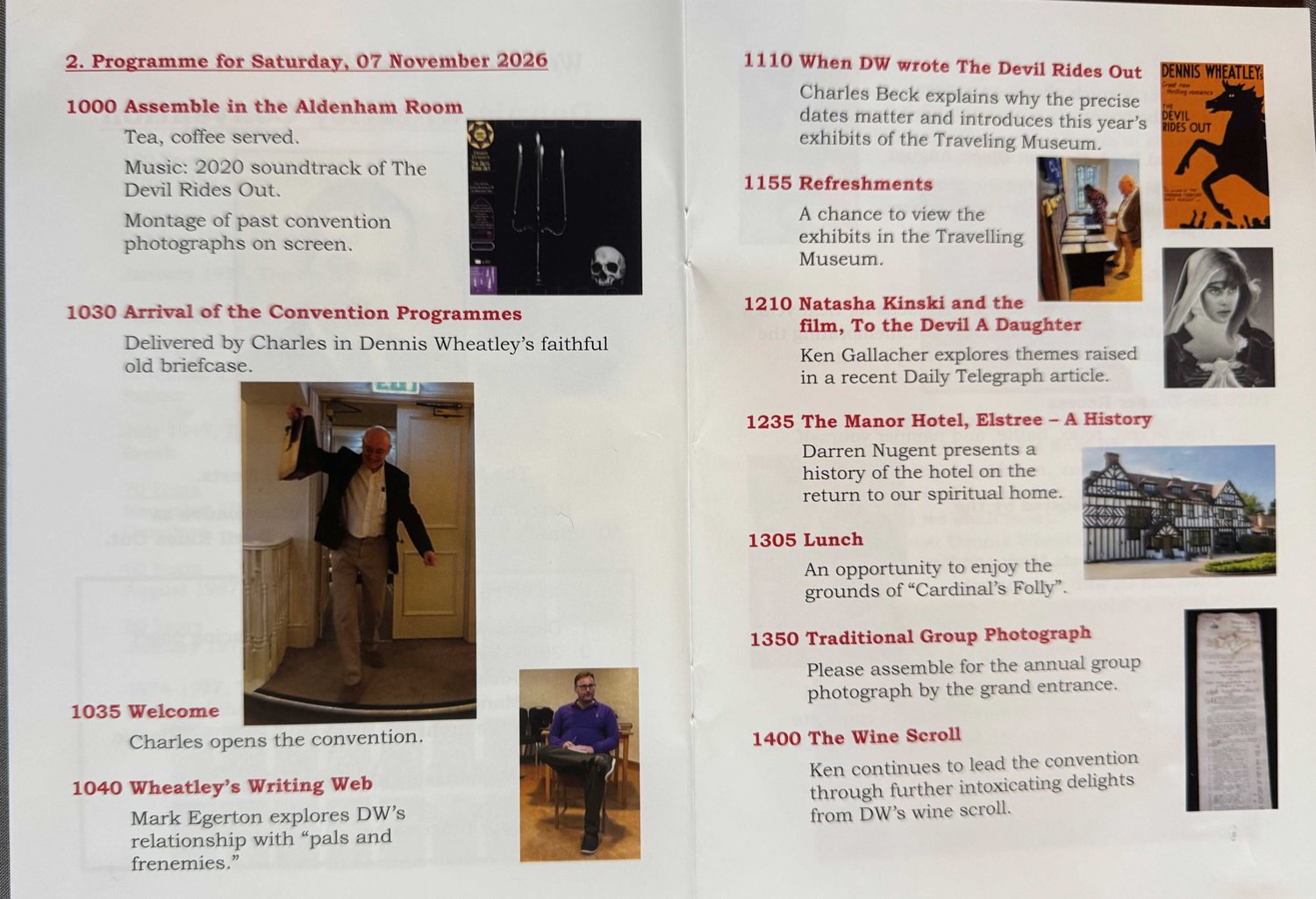
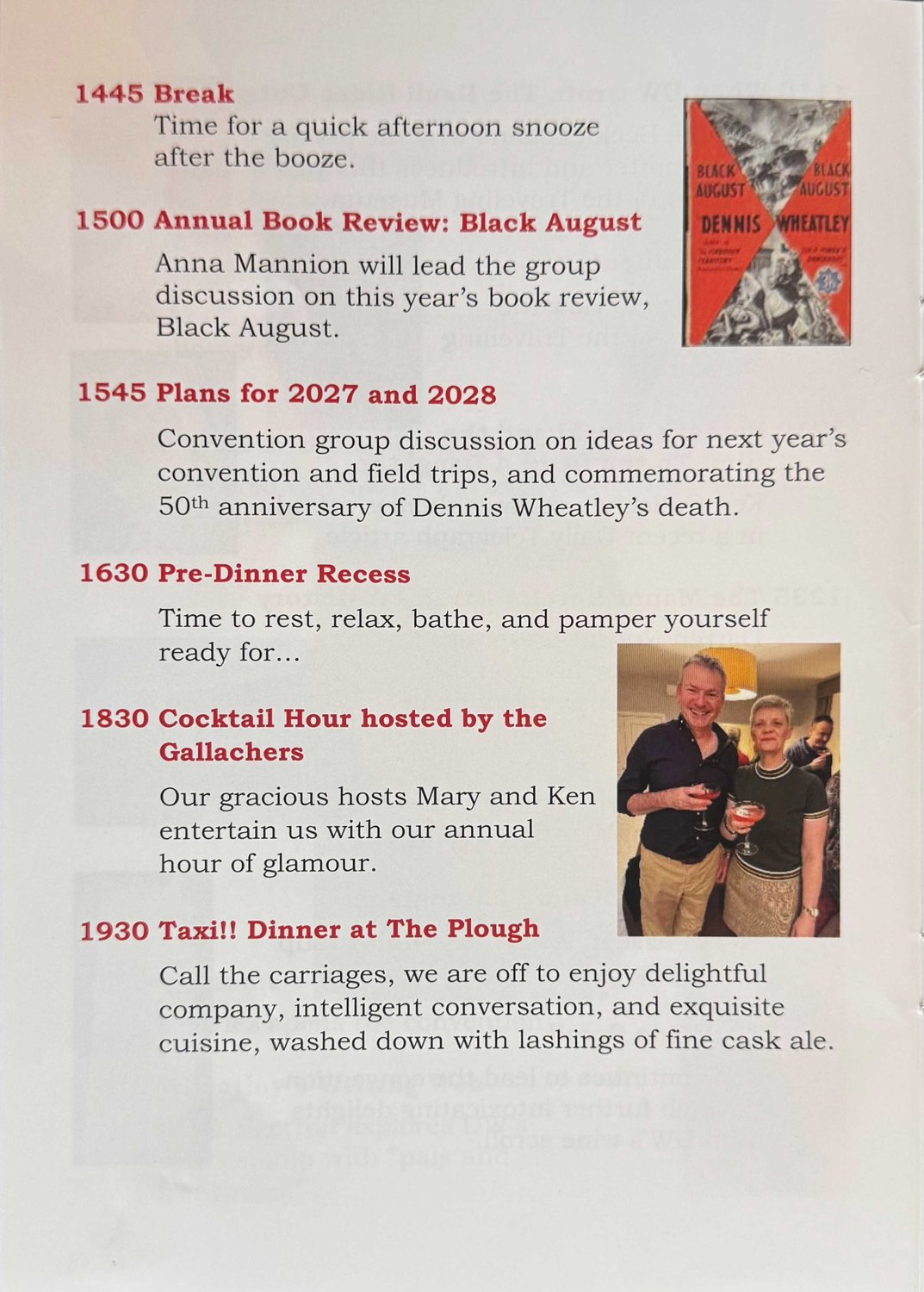
Darren's programme
Click on the images to enlarge
The programme booklets included not only details of the events of the day but a list of this year's publishing anniversaries, a history of The Manor Hotel (on which Darren spoke later in the day - see below), Steve Patton's 2005 review of Black August from the website's Old Library and some photos to bring back memories of our Convention ten years ago.
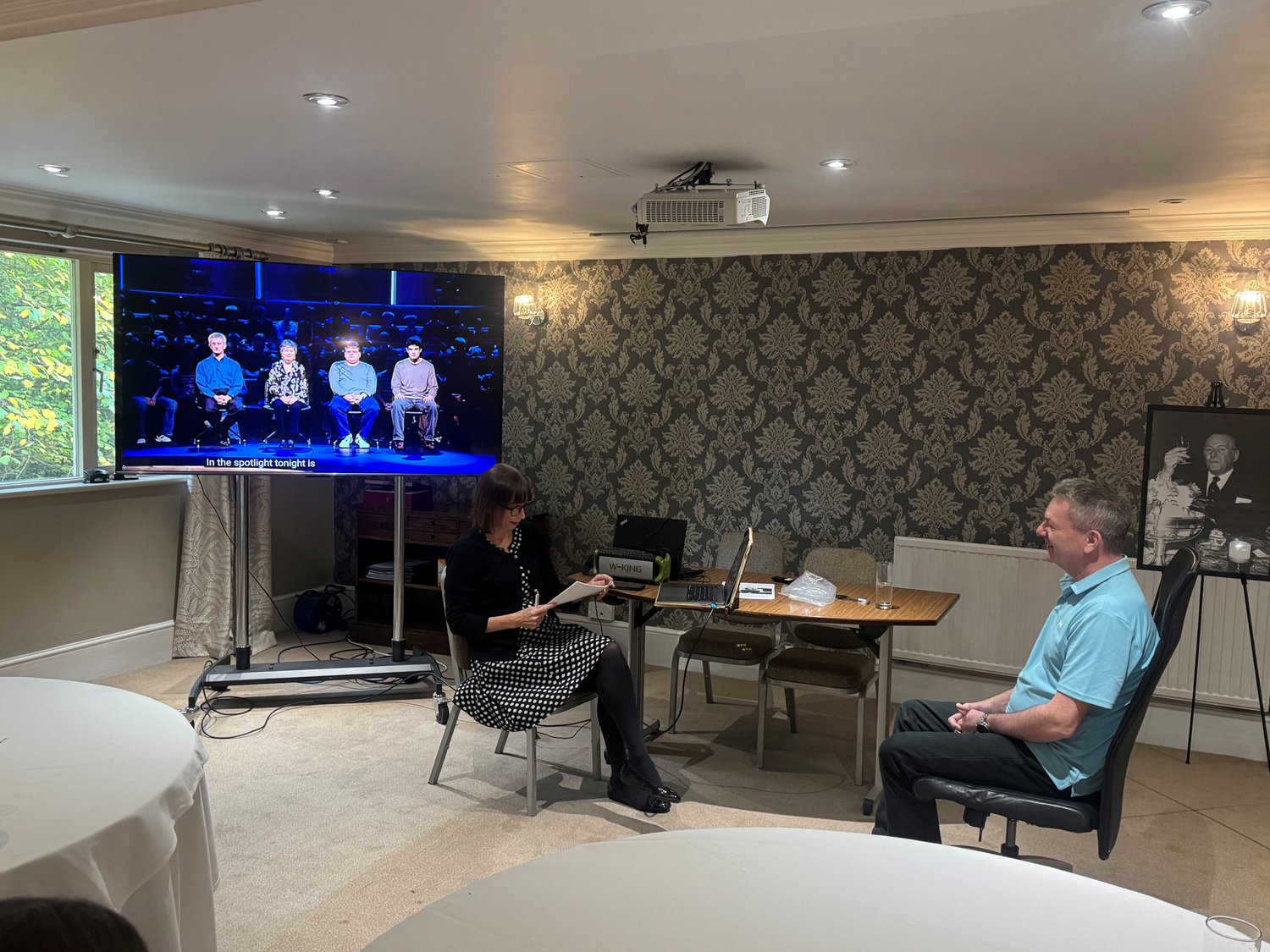
Anna tests Ken's knowledge of Roger Brook in the 'Dennis Wheatley Black Chair'
Click on the image to enlarge
Anna, replacing Mark as first in the schedule as Mark was sadly unable to attend, gave the first talk/presentation. She had put it down as 'DWBC', and we had all wondered what it could mean, but all was revealed when she started - it stood for 'Dennis Wheatley Black Chair'.
Anna took Ken G - who had only three minutes notice of what was coming (and I was very impressed that he immediately took on the challenge) - through the Mastermind questions which John Humphreys asked Katharine Drury back in 2006.
Given that Ken G had had no time to prepare - whereas for the contestant it was her special subject so she could prepare in advance - Ken G scored an extraordinarily impressive 14 correct answers with just one pass.
Anna followed this by asking the group some similar questions about the Duke de Richleau, which all enjoyed.
One thing which we all wondered afterwards was where Anna had managed to source the impressive 'Black Chair'.
If you want to look at the Roger Brook questions and answers, you can find them on Library.denniswheatley.info/viewtopic.php?p=2835#p2835
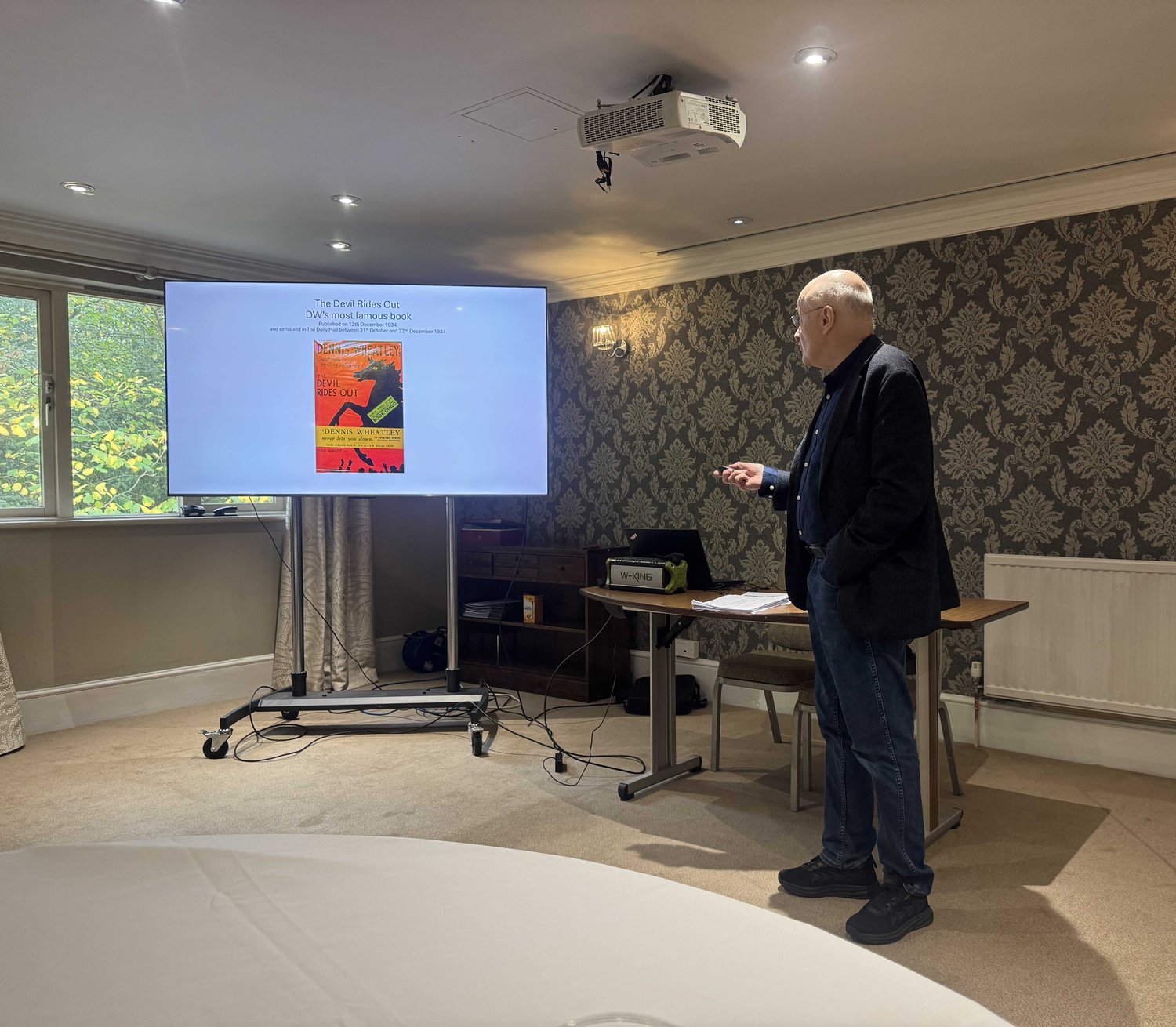
Charles talks about a revised chronology for when DW wrote 'The Devil Rides Out', and why the revised chronology matters
Click on the image to enlarge
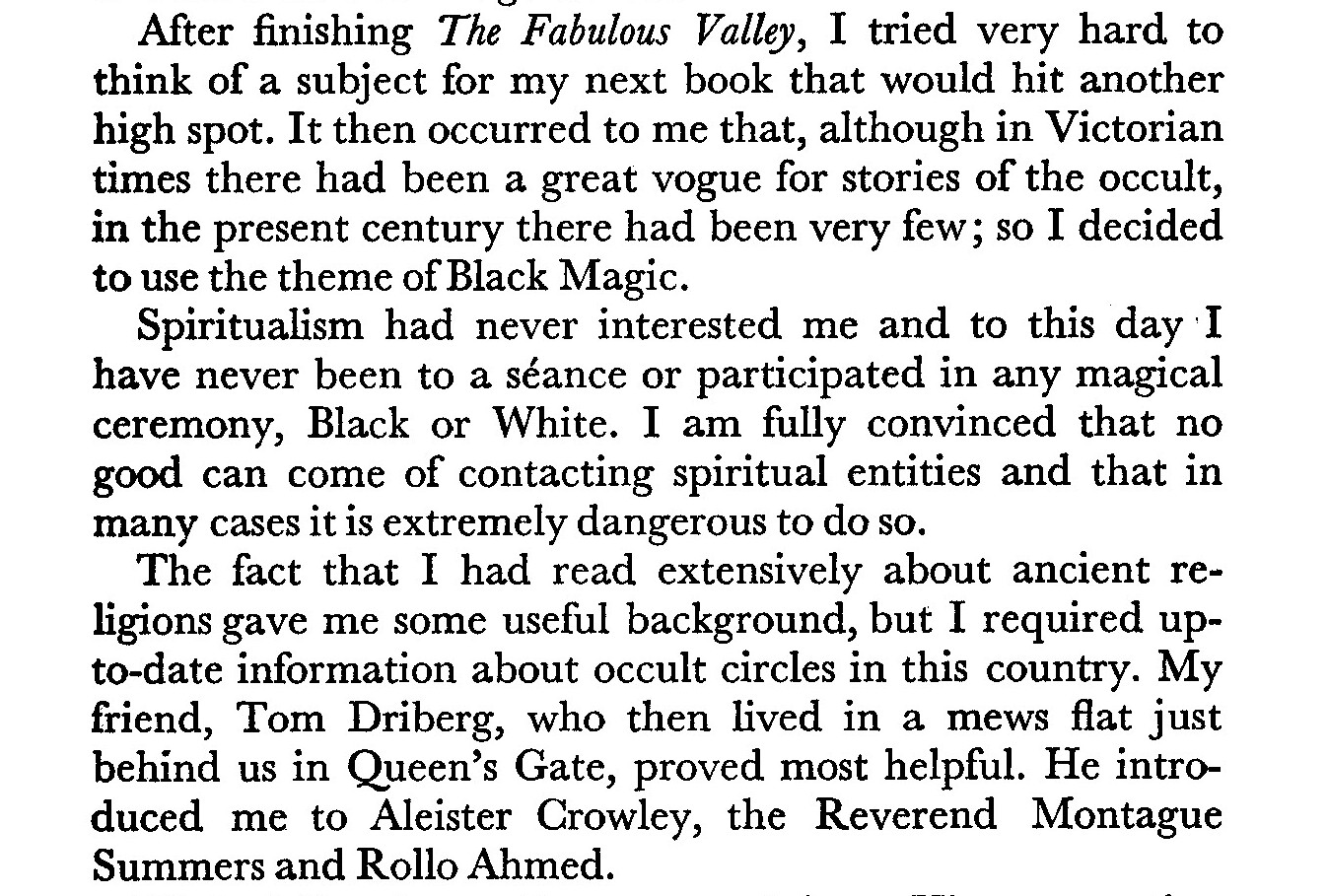
DW's account of the writing of 'The Devil Rides Out' in 'Drink and Ink'
Click on the image to enlarge
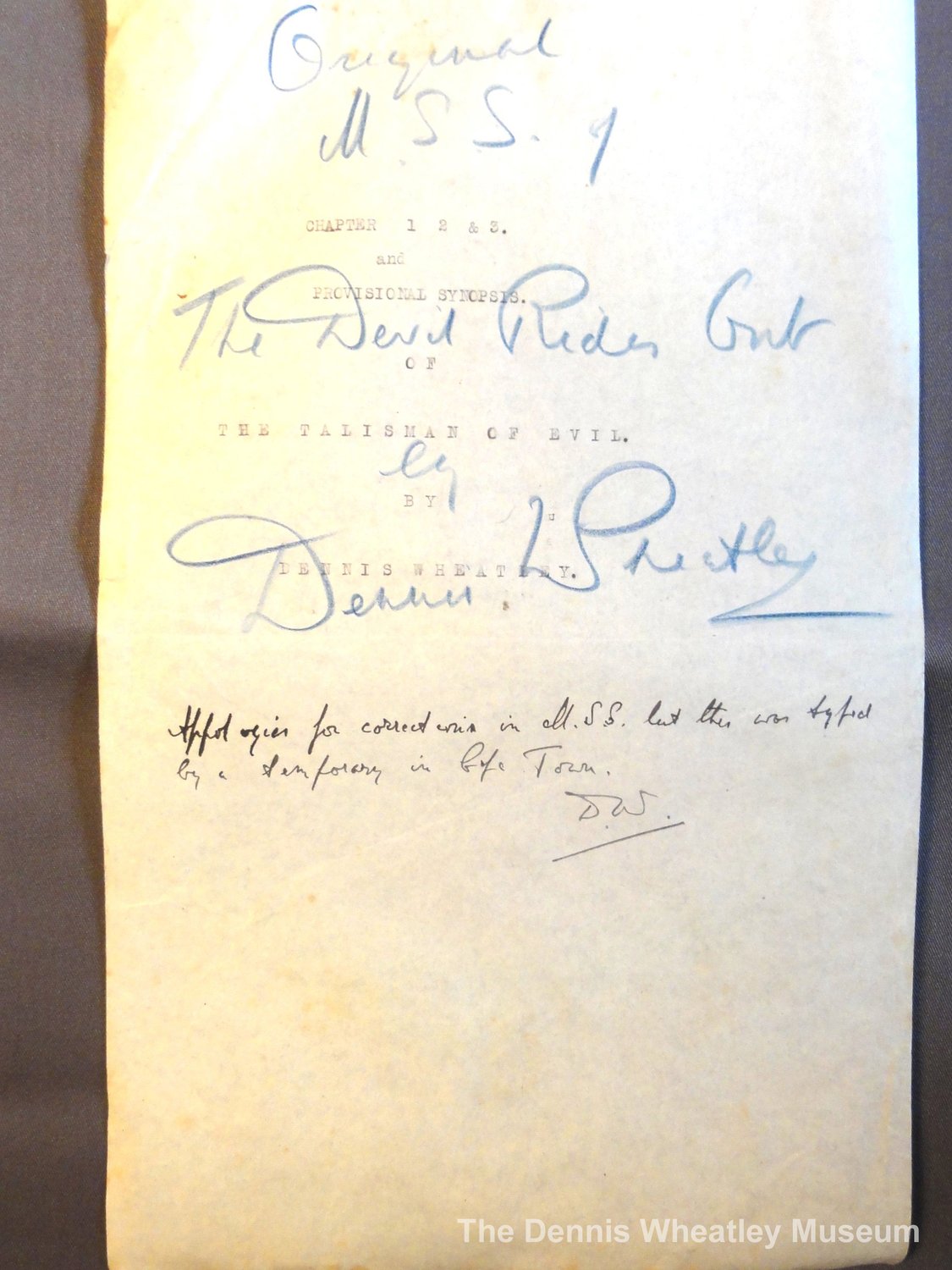
The title page in the manuscript pack, indicating that the manuscript of the first three chapters and the synopsis were typed-up in Cape Town, immediately upon DW's arrival in South Africa
Click on the image to enlarge
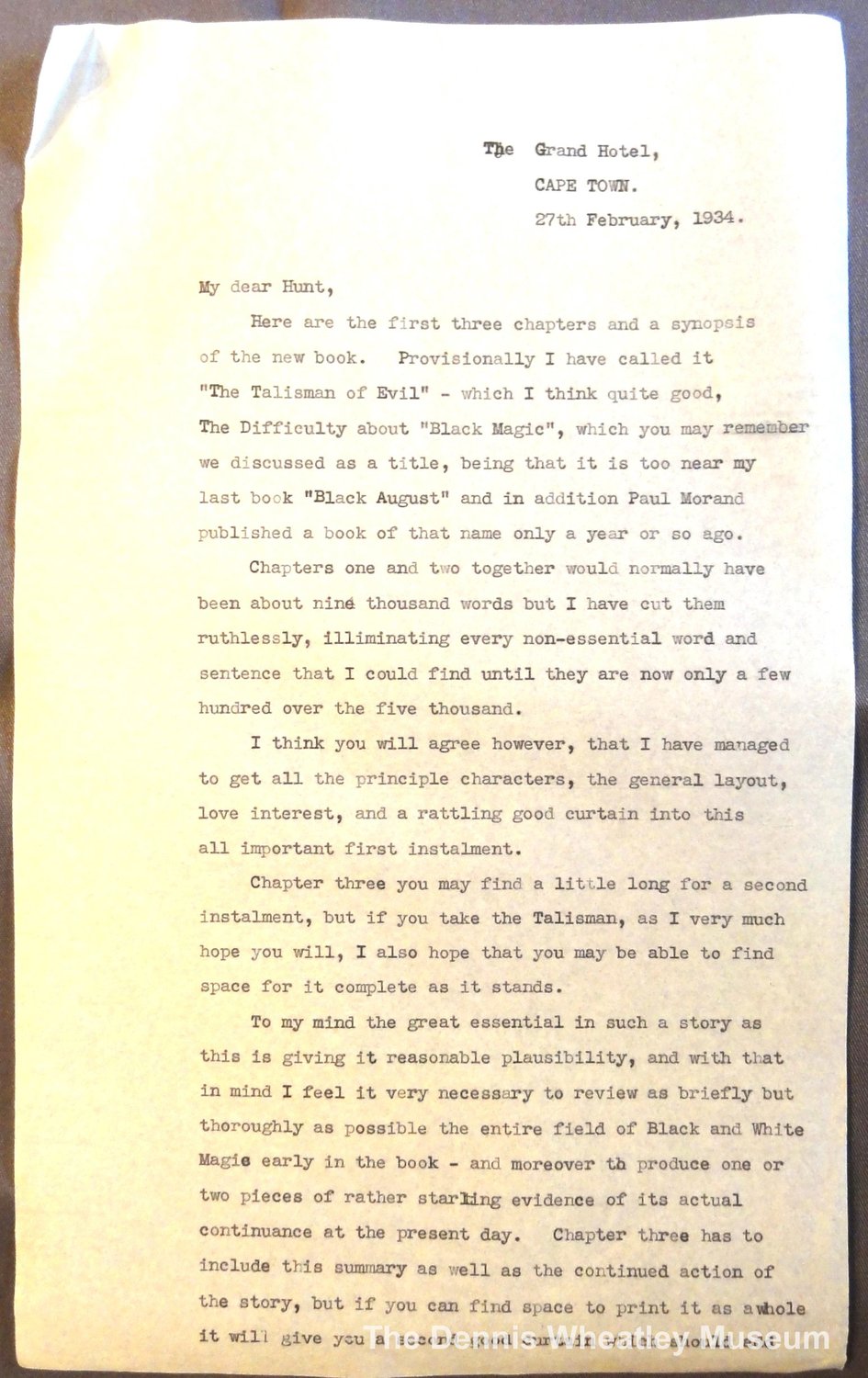
The start of a letter in the manuscript pack which shows that the book was planned and part-written before DW reached South Africa
Click on the image to enlarge
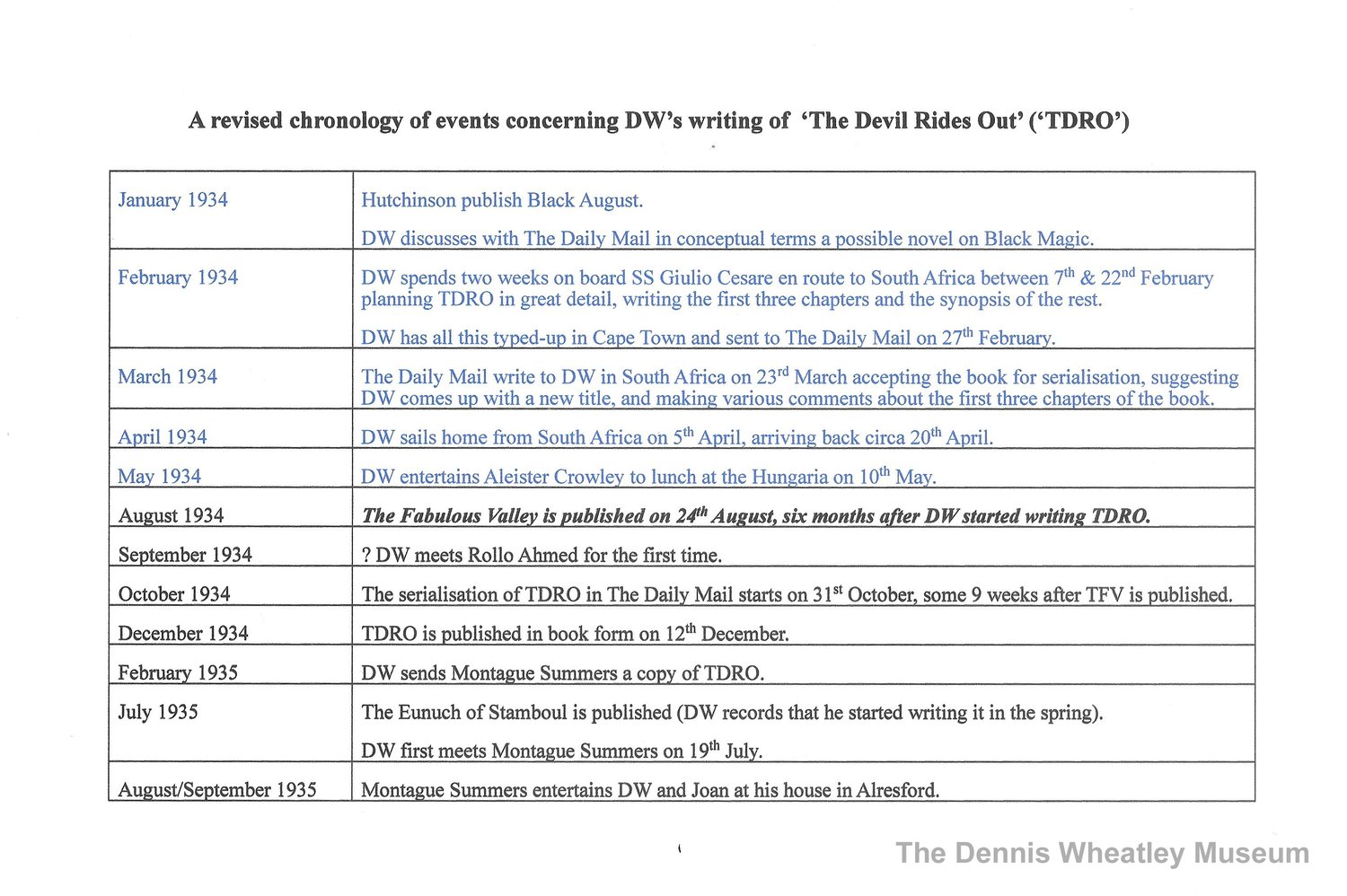
Charles's revised chronology of the writing of the book
Click on the image to enlarge
Next up, Charles gave a talk on "When Dennis Wheatley wrote 'The Devil Rides Out' - and why the precise dates matter", assisted by Keith, who read out for him various passages from DW's memoirs and his previously unseen correspondence at various points in the talk.
Using material not seen before from the manuscript pack, Charles demonstrated that rather than being conceived and written after DW left South Africa and wrote The Fabulous Valley - which is what DW wrote in his autobiography - The Devil Rides Out was in fact thoroughly planned and part-written on-board ship on the way out to South Africa.
This has important consequences not only for the order in which DW wrote his books, but also for the importance or otherwise of DW's meetings with the various occultists. DW met Crowley after the book had been thoroughly planned and part-written, and changed Mocata's appearance after their lunch to make Mocata look like Crowley. He probably first met Rollo Ahmed a couple of months after that, and although DW clearly used Montague Summers' books while doing his research, he first met Montague Summers a number of months after the book was published.
Charles said it was unclear why DW later told a different story. Certainly, the real chain of events was complicated; but whatever the reasons, it cannot have hurt the book's sales for the public to have thought that DW consulted the major occultists of the day in person before he wrote the book; and DW certainly conducted diligent book research while writing the novel, although he never fully acknowledged his debt to one important author of fiction, namely the late William Hope Hodgson.
To read a fuller account of Charles's discoveries and conclusions, click here.
A similar account is going to appear as a Postscript to Room 7 of the website's virtual Museum, 'Researching the Occult - The Devil Rides Out' so it remains up-to-date and comprehensive.
There then followed a break, during which the group could browse the items which Charles had brought along to form this year's 'Travelling Museum'.
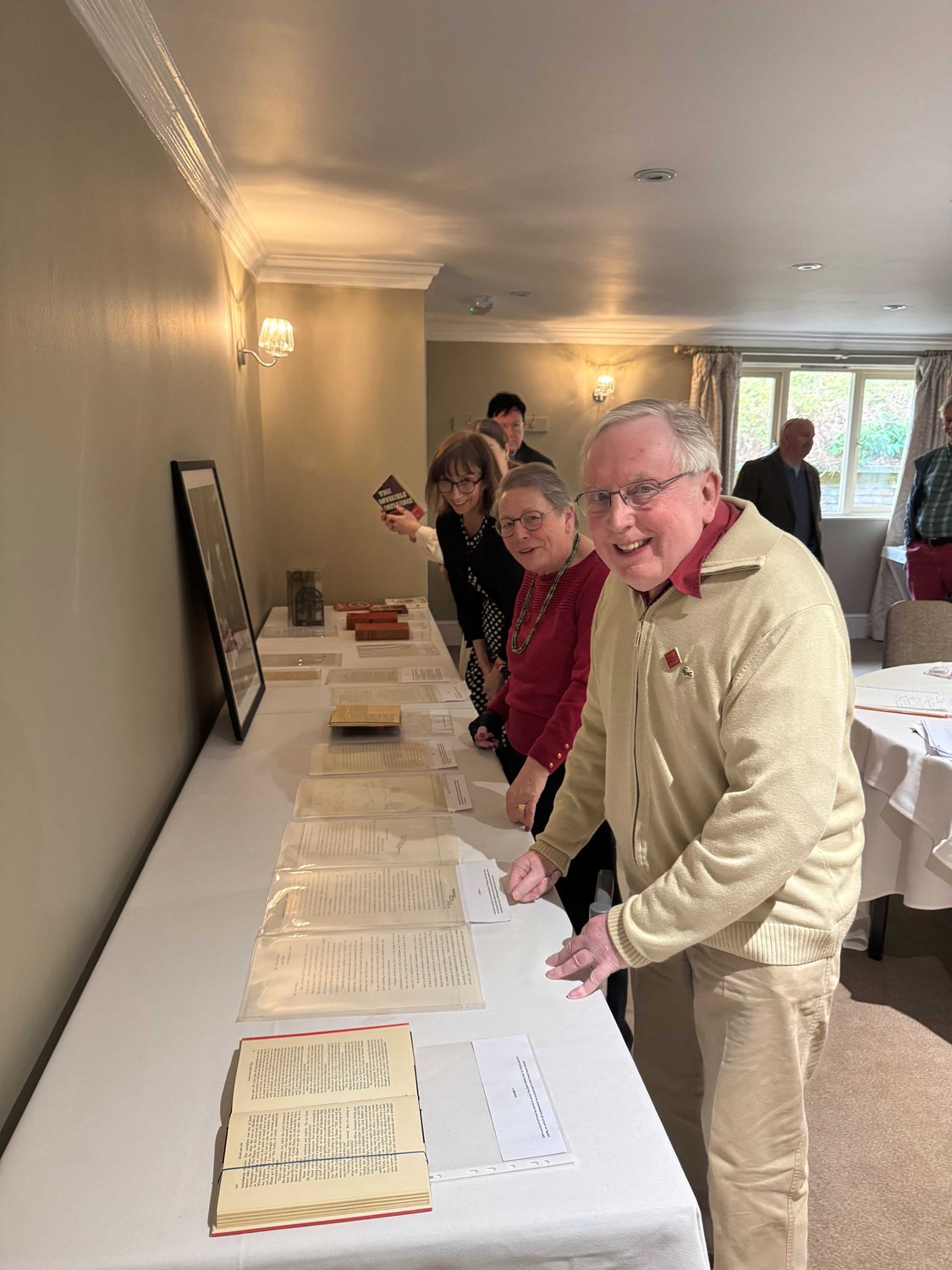
The Travelling Museum
Click on the image to enlarge
For this year's Travelling Museum, Charles brought along a record number of exhibits - all with relevance to his talk about the chronology of DW's writing of 'The Devil Rides Out'.
The exhibits included pages from DW's manuscript pack, including the original annotated title page and one of DW's letters to The Daily Mail from South Africa about the book's serialisation; the originals of some correspondence between Montague Summers and Dennis Wheatley; a book from the library of 'His Excellency Sir' Alexander Cannon and DW's own uniformly bound set of William Hope Hodgson's works, which he bought in the early 1920s, and from which he took many of his ideas for 'The Devil Rides Out'.
Only one of these exhibits had ever been seen before in public.
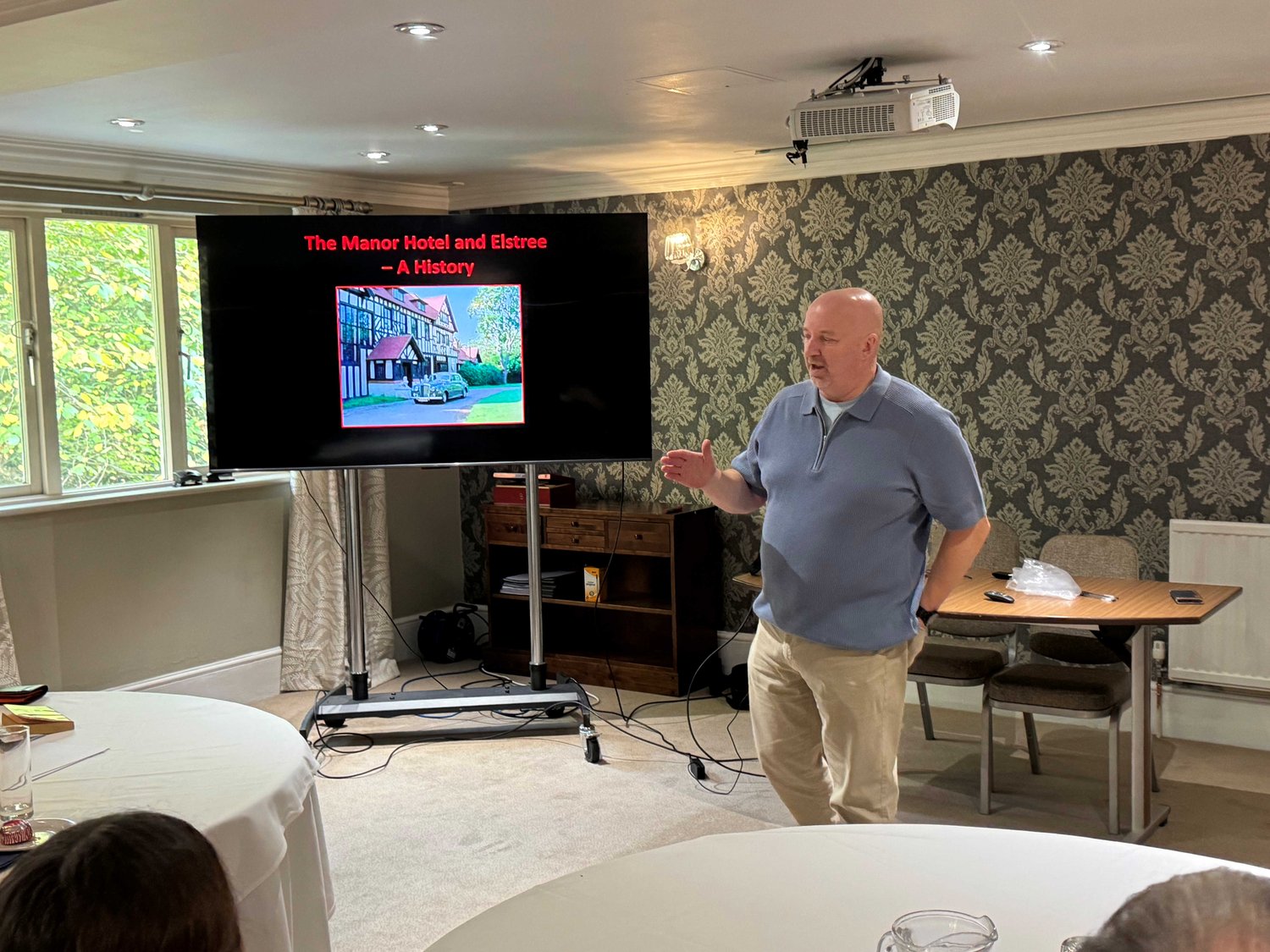
Darren talks about 'The Manor Hotel and Elstree - A History'
Click on the image to enlarge
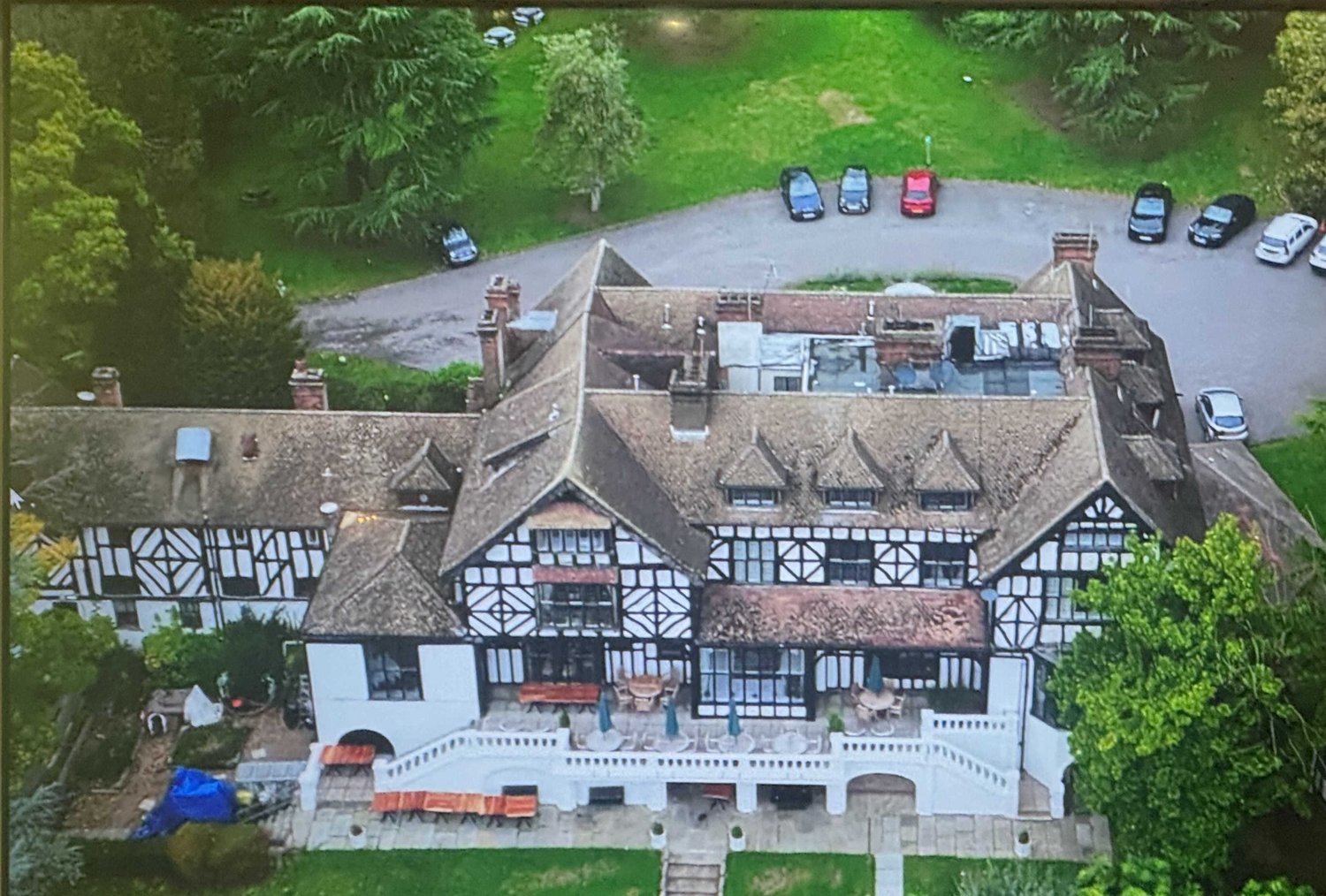
An aerial view of The Manor Hotel
Click on the image to enlarge
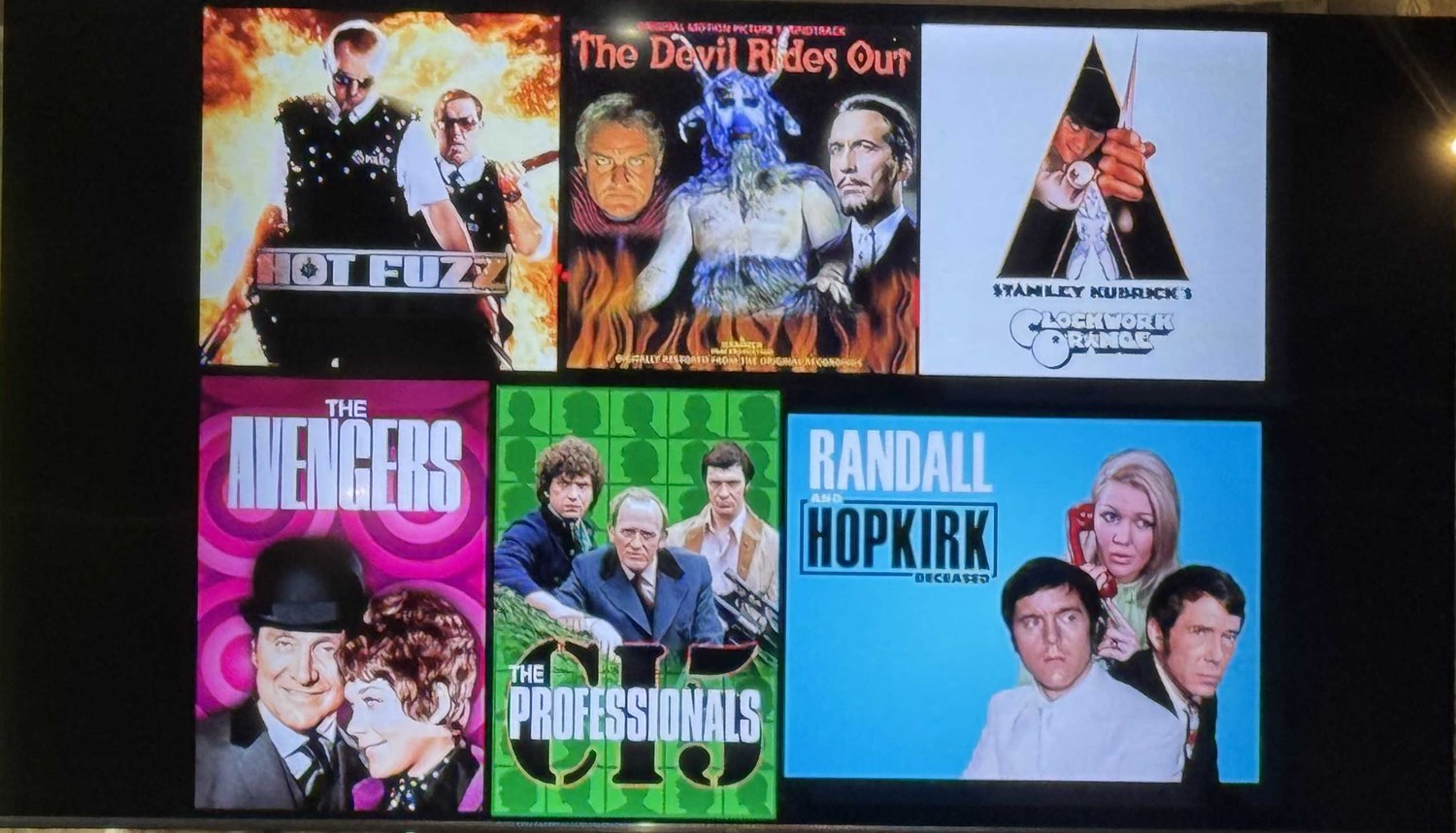
A selection of films and TV dramas filmed at The Manor Hotel
Click on the image to enlarge
After the break, Darren gave a talk on 'The Manor Hotel and Elstree - A History'.
Including some impressive aerial shots of the hotel, he took us through the history of the hotel and its environs, and its importance to the history of the cinema, which turned out to be considerable.
The history of the area was long and at some points grisly. I had never heard of the practice of 'baby farming' before, but it was rife in the 18th and 19th centuries, and we were reminded how fortunate we are to live when and where we do.
Grisliness also applied to some of the history of the hotel. On its site in the 1730s took place an incredibly nasty case of home invasion - with the owner of the house on this very site being the target of an exceptionally nasty and violent attack by the Gregory Gang, whose members included a young Dick Turpin. Many members of the gang were caught and hung, but Dick Turpin escaped and lived to become famous before meeting the same fate.
Turning to films, among others, Stanley Kubrick's 'A Clockwork Orange' was partly filmed on the site, and going through its plot, Darren made the intriguing suggestion that it might have been inspired by the Gregory Gang incident, and indeed have been putting a past wrong right; in real life the miscreants escaped, although they were later caught. In this version, it is the victim himself who takes his revenge on the miscreant - with his final come-uppance taking place through a window on the hotel. The fact that Kubrick lived for some years in the vicinity gave Darren's theory all the more credence.
Darren also gave us a hilarious - but true - cautionary tale of why it could be dangerous to go out for a walk, but I will leave that for the enjoyment of those who were actually there.
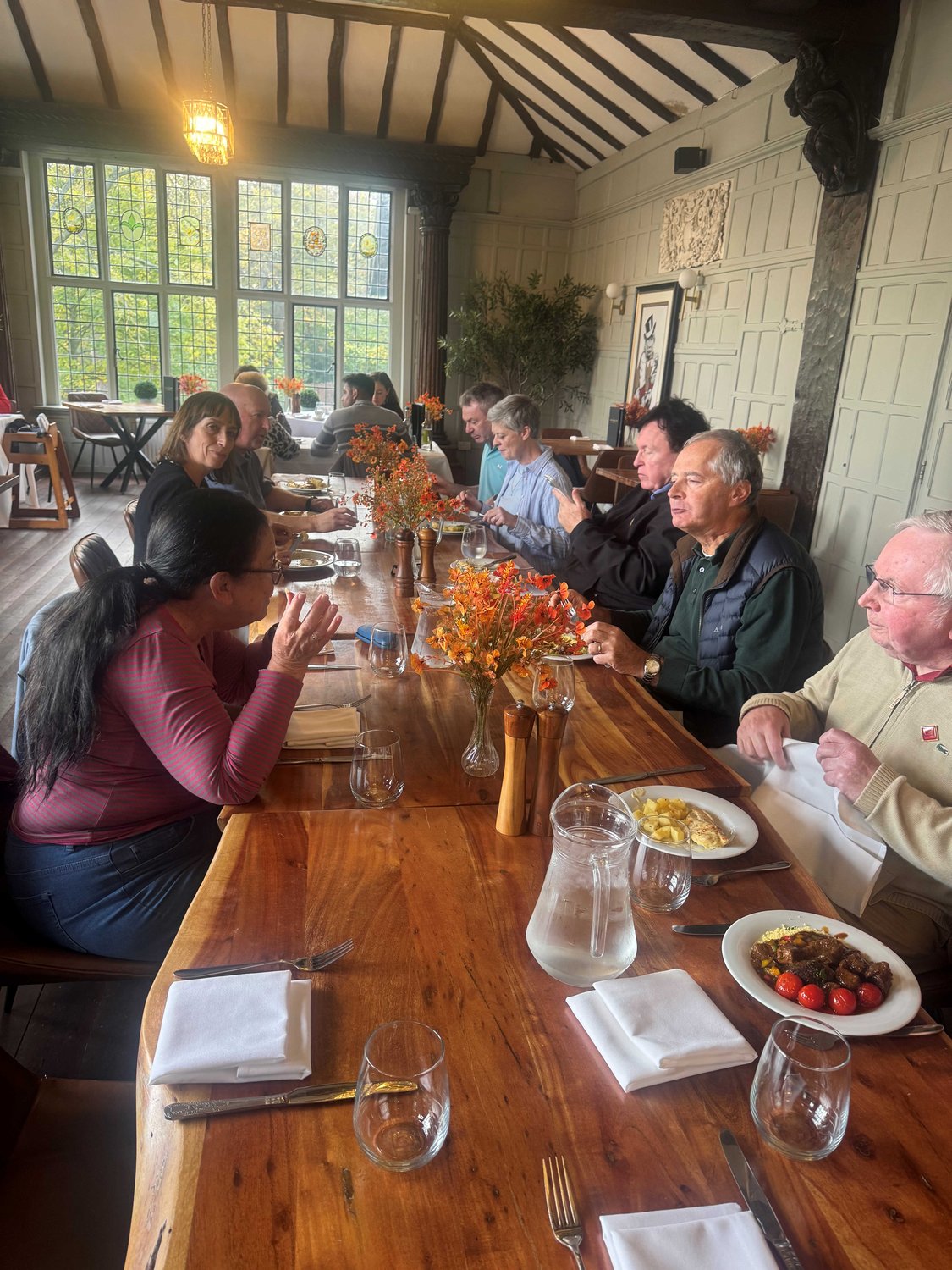
Lunch
Click on the image to enlarge
There then followed lunch, which was in turn followed by the usual group photo. This time Front of House Manager Jo Brown was asked if she would be happy to be included in the group photo, and I am happy to say that she was; it being fitting, because she had taken almost all the group photos that had been taken of us on previous visits.
For this year's group photo, see the top of the page.
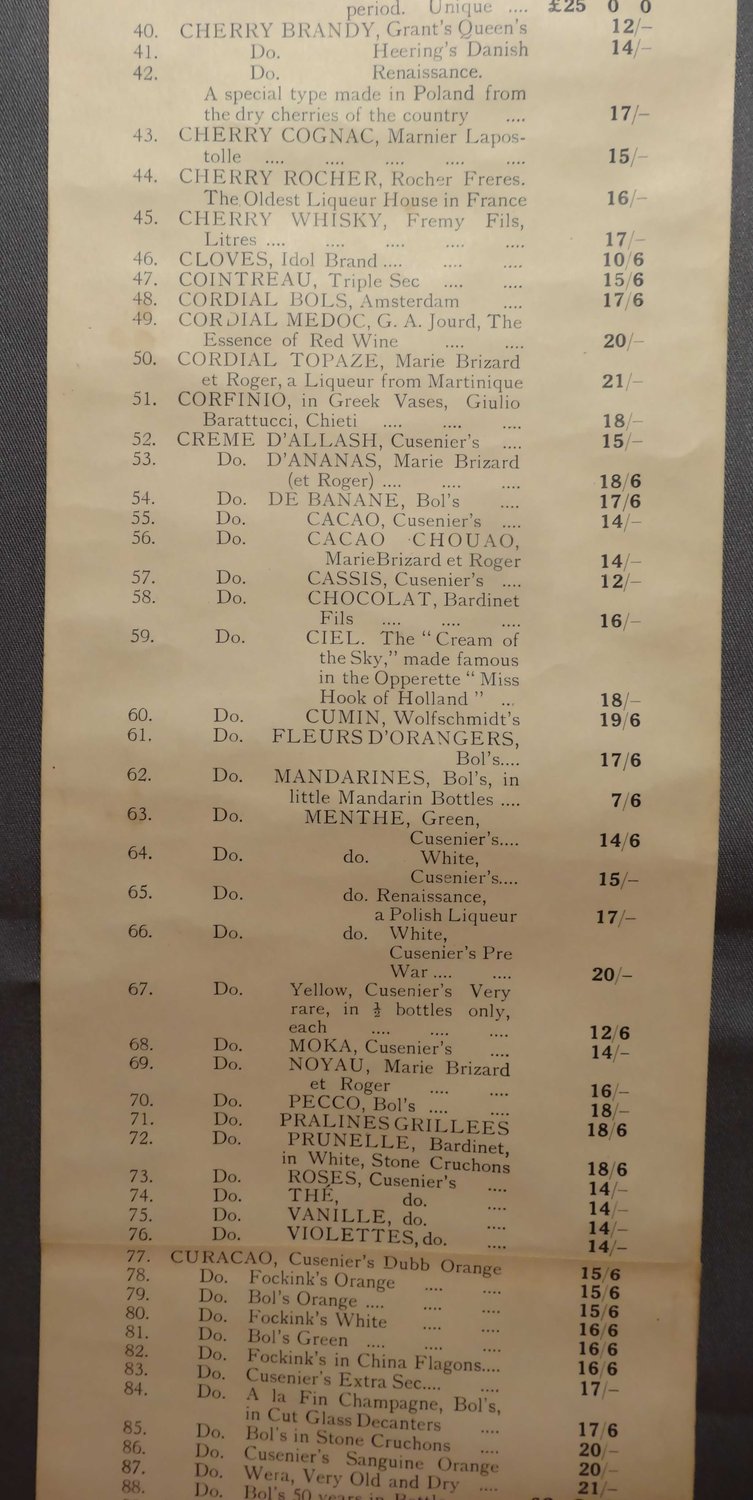
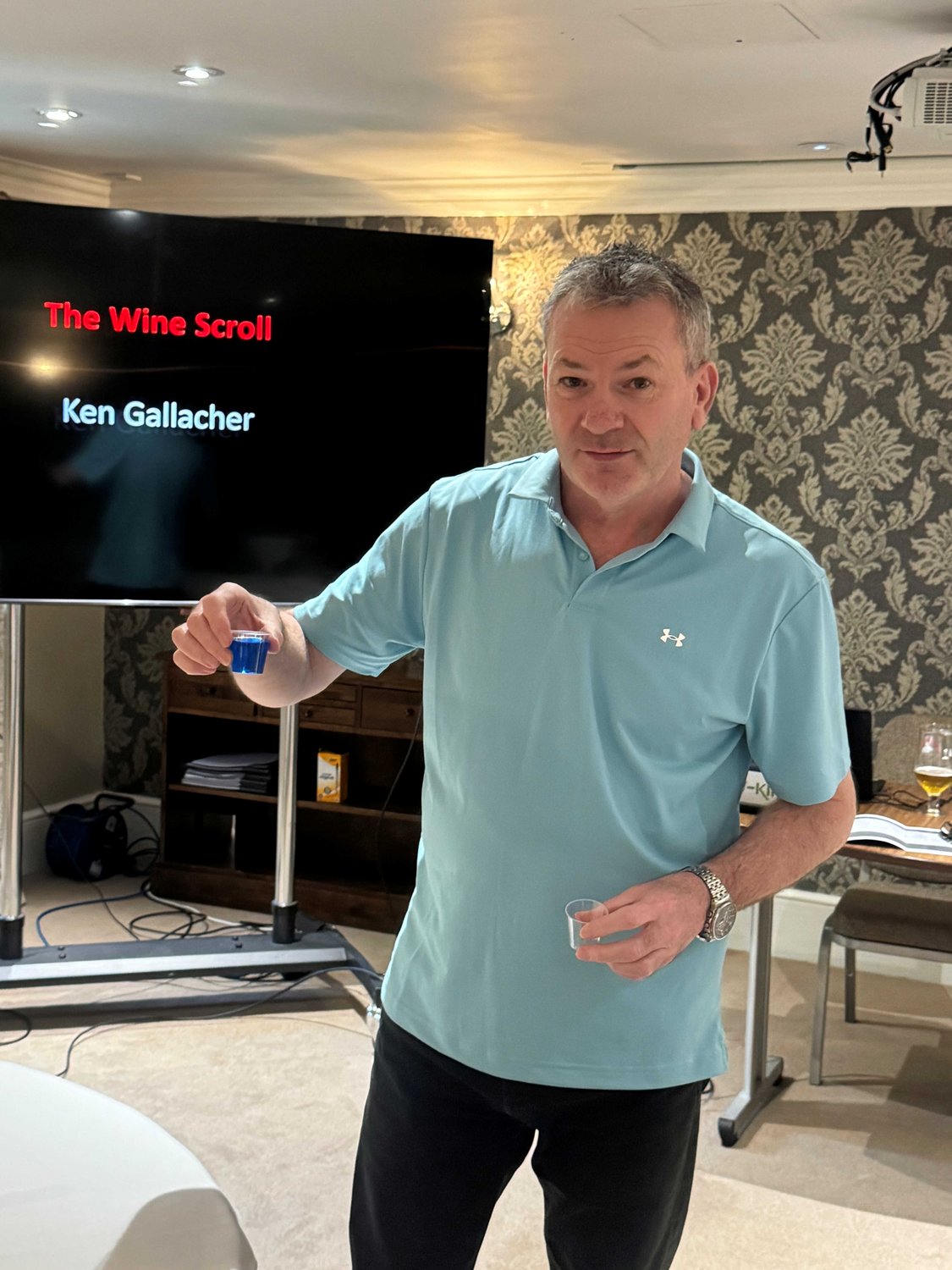
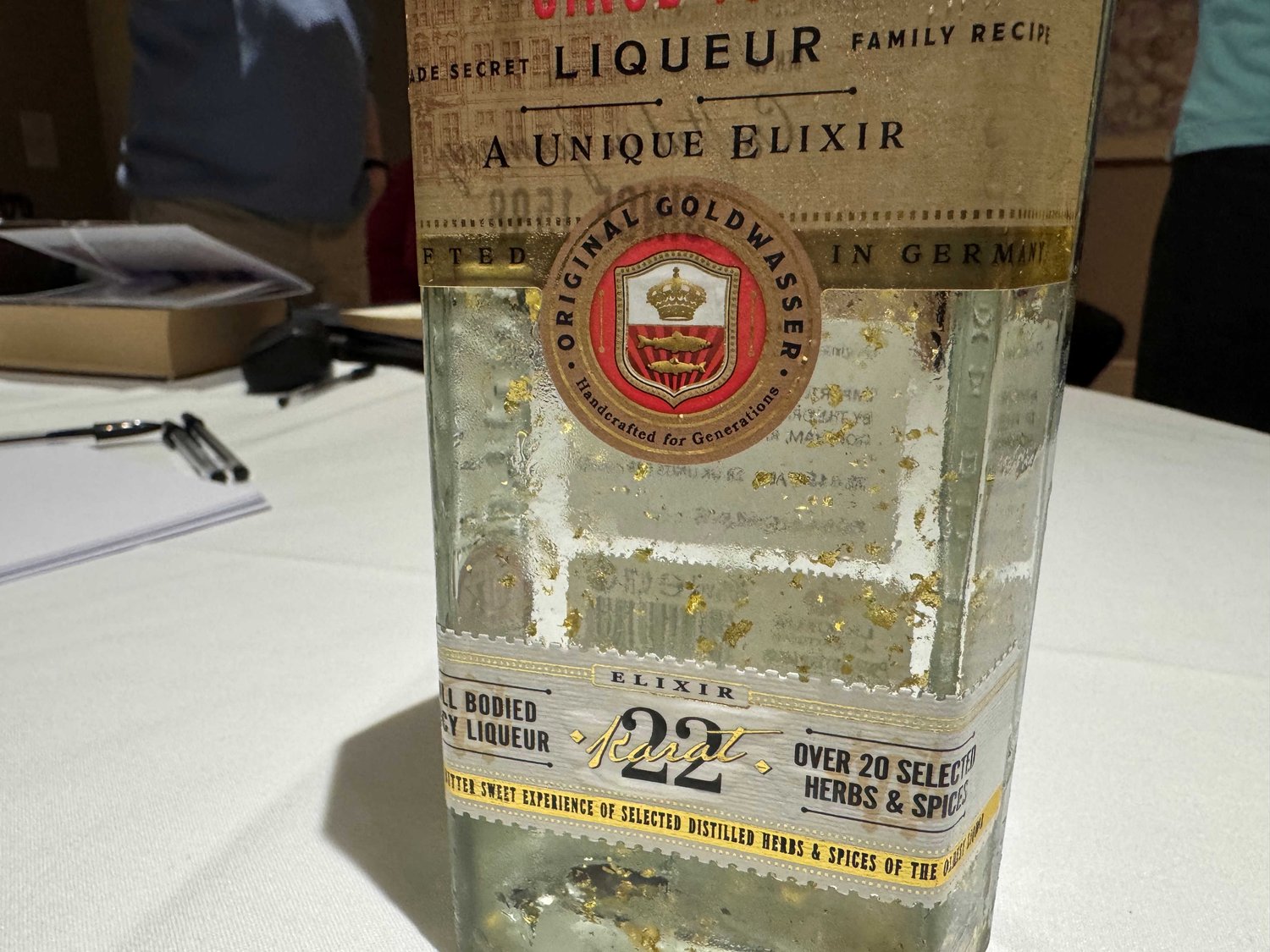
Ken G takes us through a further section of DW's 1927 Wine Scroll
A section of the wine scroll (top) ... and Ken G offering tasters of Blue Curacao (below) ... and extreme bottom, the wonderful looking Danziger Goldwasser, with real gold leaf floating in the alcohol
Click on the images to enlarge
After the group photo, Ken G took us through a further instalment of DW's 1927 wine scroll from the days when DW was a successful wine merchant, taking on from where Declan and he had last reached on the list.
Among other drinks taken from the list, the group was able to sample de Kuyper Triple Sec, Blue Curacao (which looked highly dubious), the wonderful looking Danziger Goldwasser and Drambuie, all the while learning a little bit of the history of each, and why they were included on the list.
A good time was definitely had by all!
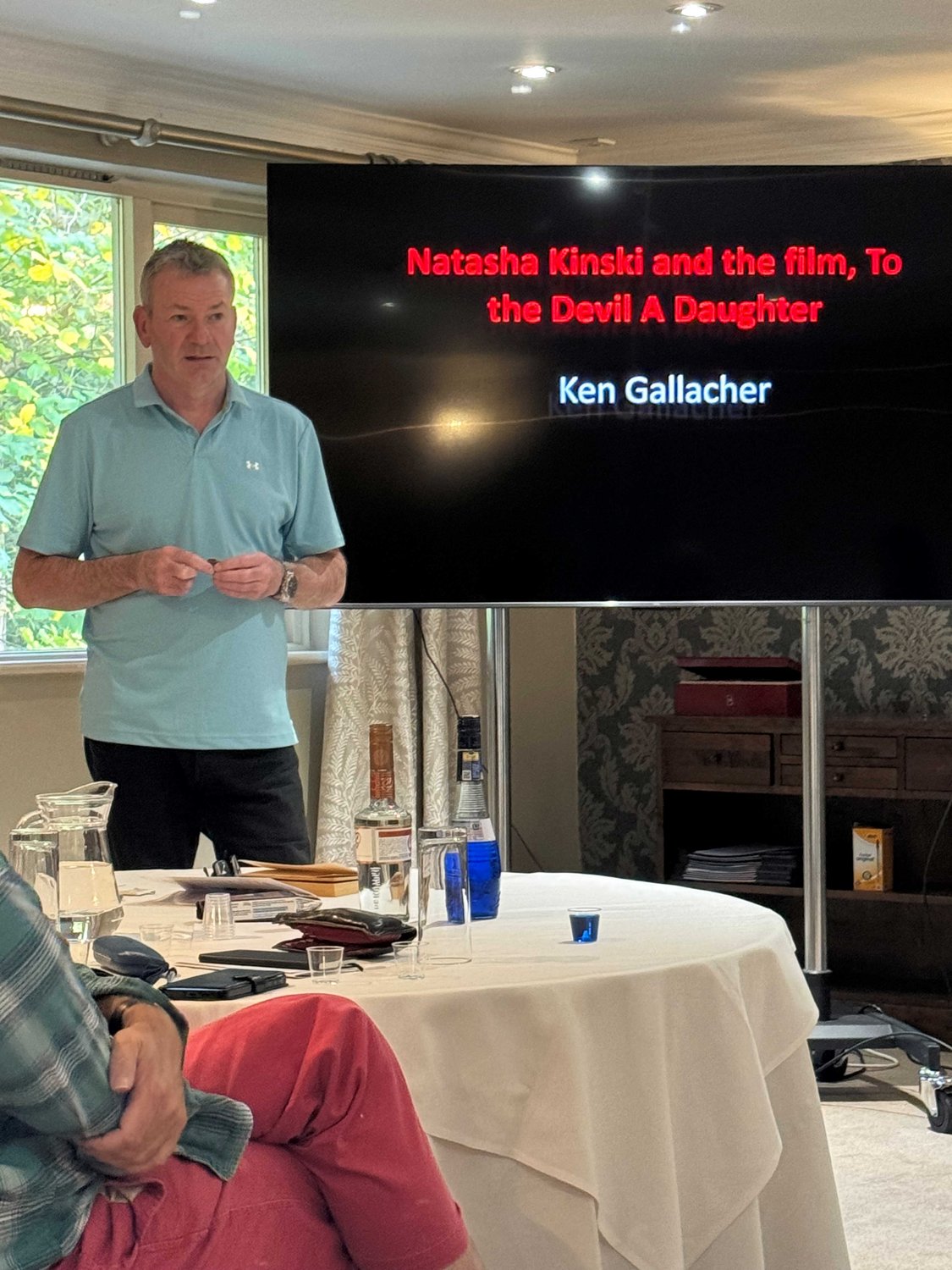
Ken G talks about Nastassja Kinski and the filming of 'To The Devil A Daughter'
Click on the image to enlarge
Following on from this, and picking up on a WhatsApp thread started by Keith in June when he shared a link to an article in The Daily Telegraph on Nastassja Kinski's childhood, Ken G took the group through the only-now-known harrowing story of Natassja Kinski's youth, and how when she filmed the scenes in 'To The Devil A daughter' she was only thirteen, and none of the protections that are now in place to protect vulnerable actors were then in place.
It was perhaps a contributing factor to DW having a violent dislike of the film when he saw it, and it was the last film that Hammer was to make of any of his books. That said, apparently at the Box Office the film sold very well.
A salutary reminder that things are sometimes nastier than they seem.
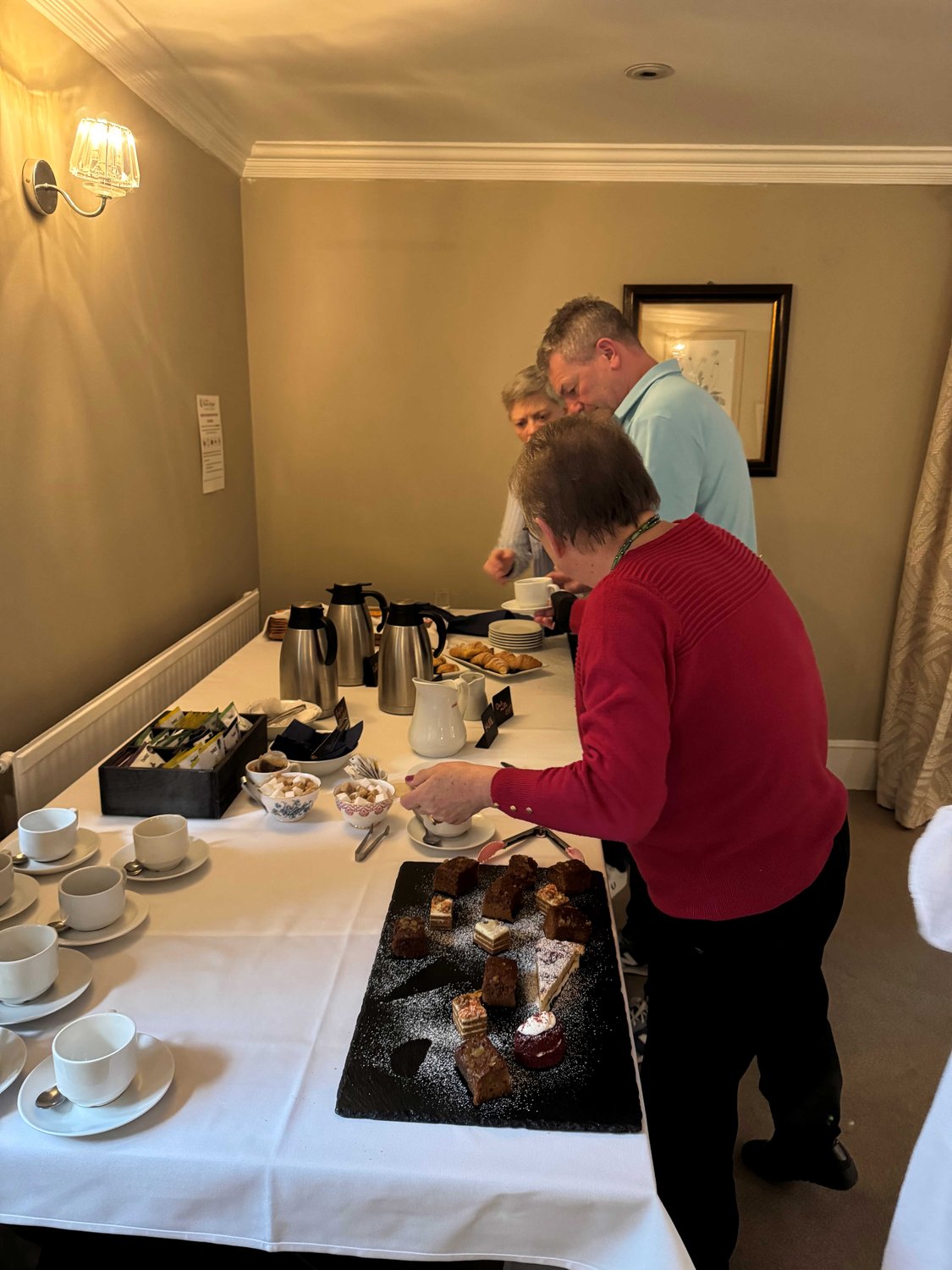
The tea break
Click on the image to enlarge
There then followed a tea break.
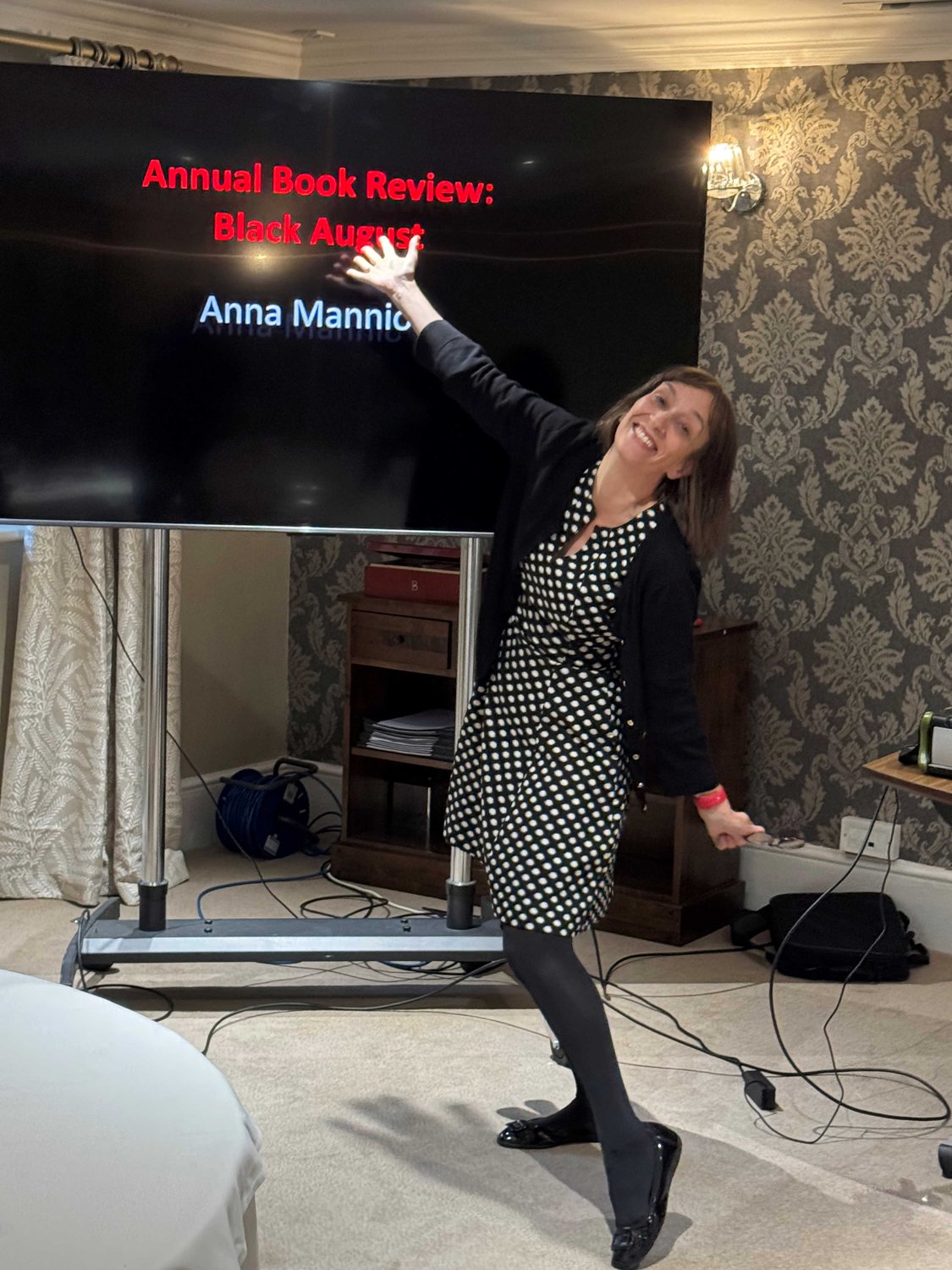
Anna leads the book review on 'Black August'
Click on the image to enlarge
After the tea break, Anna led the book review on Black August, which everyone had read since the last Convention.
A great surprise was that whereas the book had come 10th (appearing on four lists) when Darren had done his survey in 2024, it found rather less favour this time round. In response to a show of hands, while four people said they had enjoyed it (one assumes the same four?), six had not - and these included Anna herself, who was normally a huge Gregory Sallust fan.
The reasons for not enjoying it were fairly widely shared by those of that opinion - while always ruthless, Gregory was far more cynical and self-centred in this book, and up until the last scene, showed little reason why he should be trusted, even by his 'friends'.
Furthermore, the action was very 'bitty', with each endeavour being followed by another which was seemingly completely different, and some of the events were more implausible than usual.
That said, even the detractors generally enjoyed some scenes. Charles, for example, lives near the Jamaica Road where some of the early action takes place, and he found these passages effective in the extreme.
That said, while everyone was glad they had read it, several considered it a disturbing book.
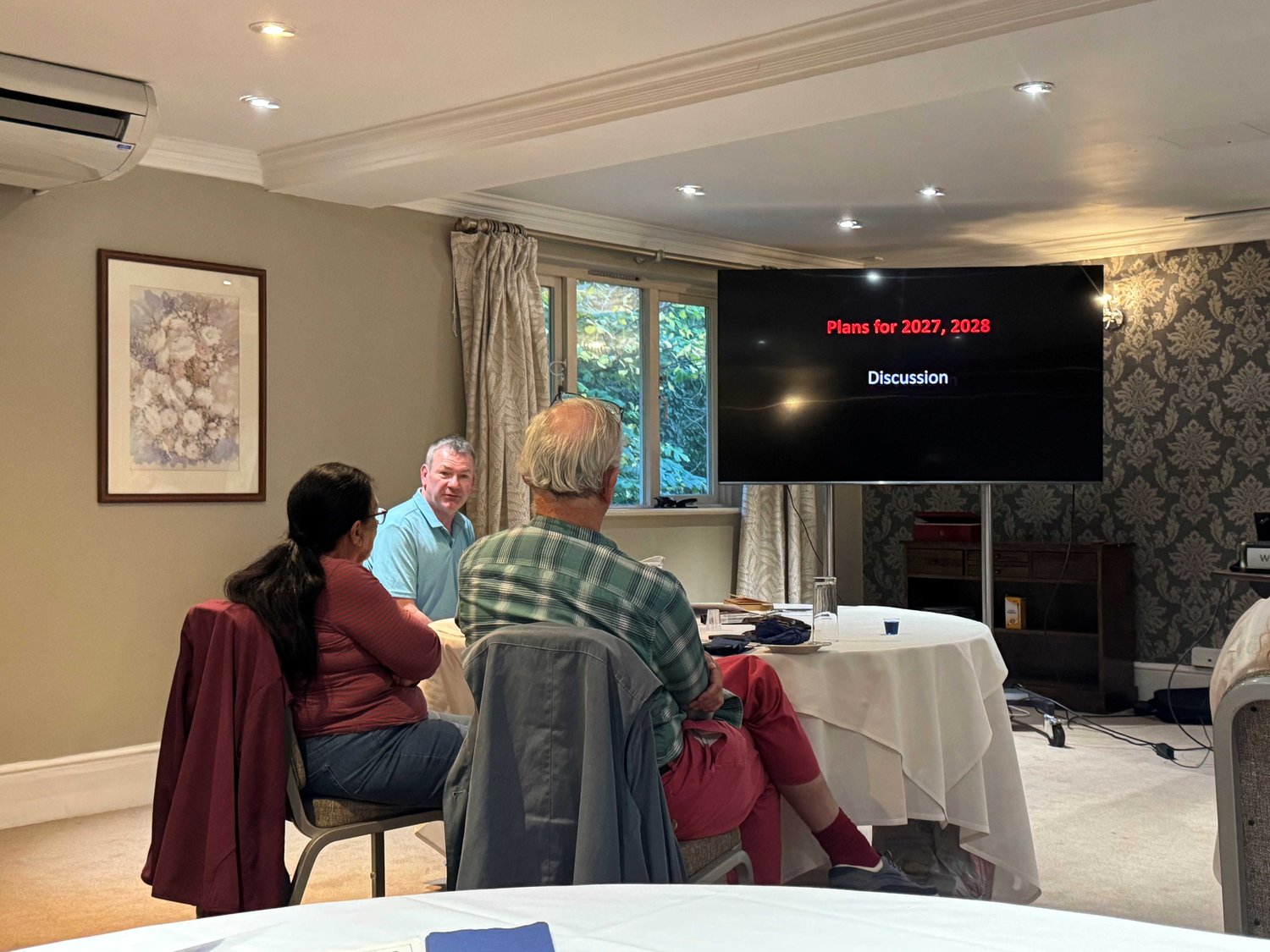
Ken G leads a discussion on 'Future Plans'
Click on the image to enlarge
Finally and to bring the formal proceedings to a close, Ken G chaired a discussion on 'Future Plans' - which was of particular importance this time as next year would be our 20th Convention, and 2027 would also mark the 50th anniversary of the death of Dennis Wheatley.
It was agreed that the next Convention will take place at The Manor Elstree on 5/6/7 November 2027, and anyone who would like to make a presentation or talk was warmly invited to contact a member of the organising Committee, and the book for group review will be 'The Launching of Roger Brook'.
It was agreed it would also be nice to have another Field Trip; suggestions similarly invited on this.
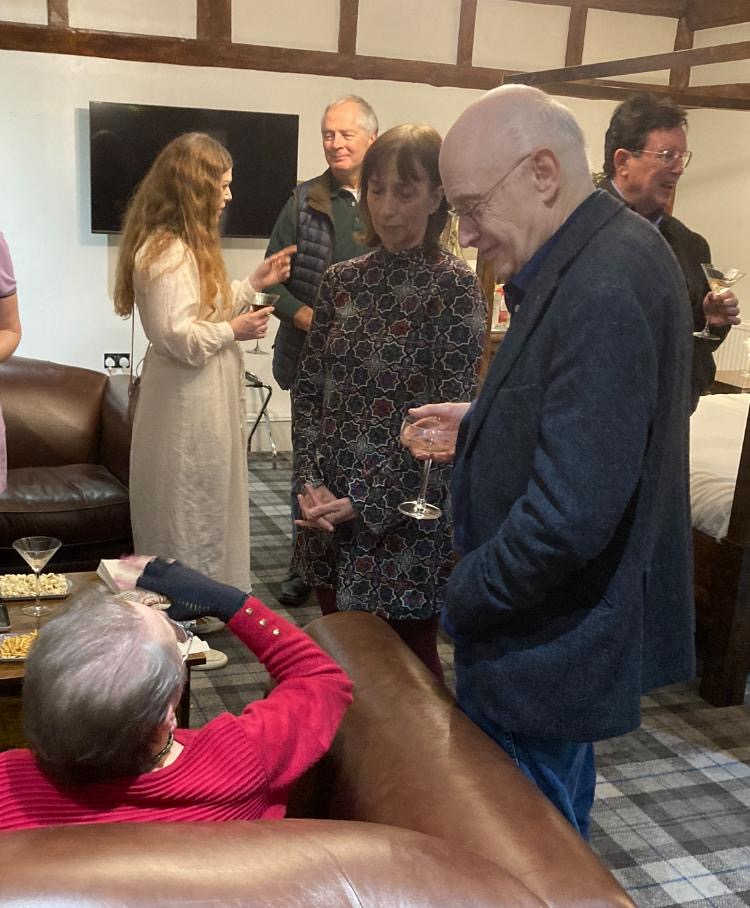
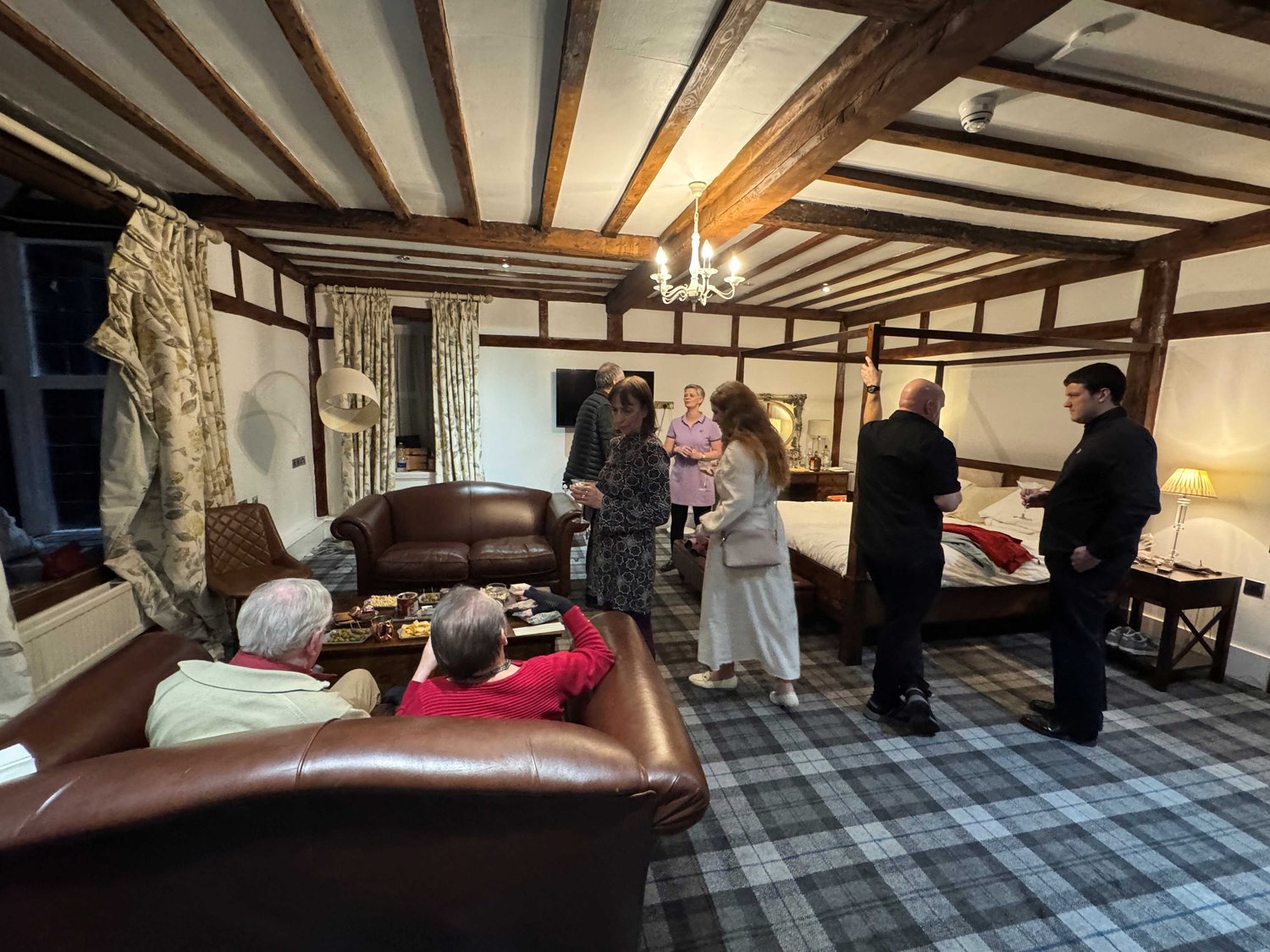
Ken and Mary's cocktail party
Click on the images to enlarge
After a break, we all attended Ken and Mary's Cocktail Party - as usual a very good time was had by all.
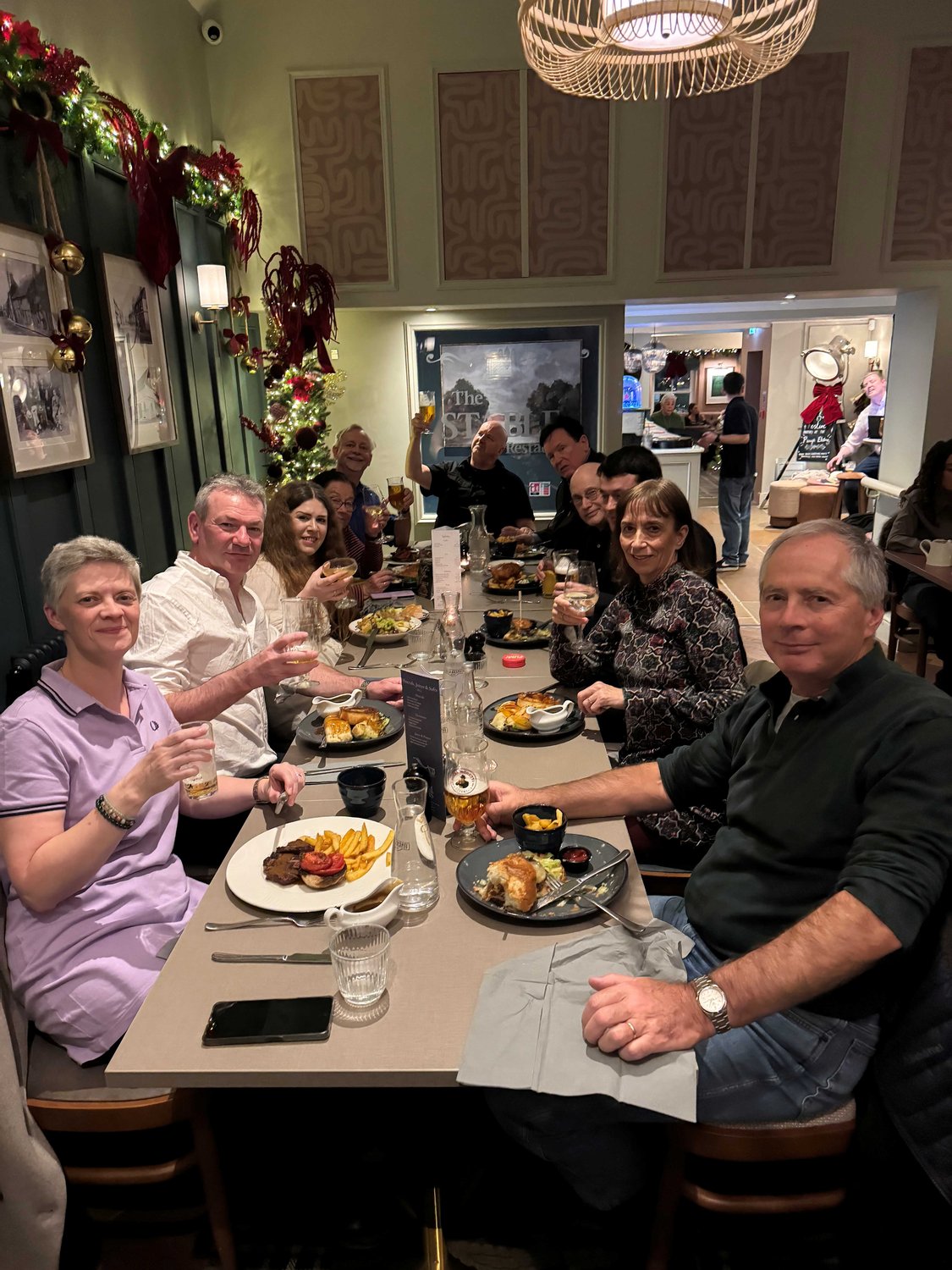
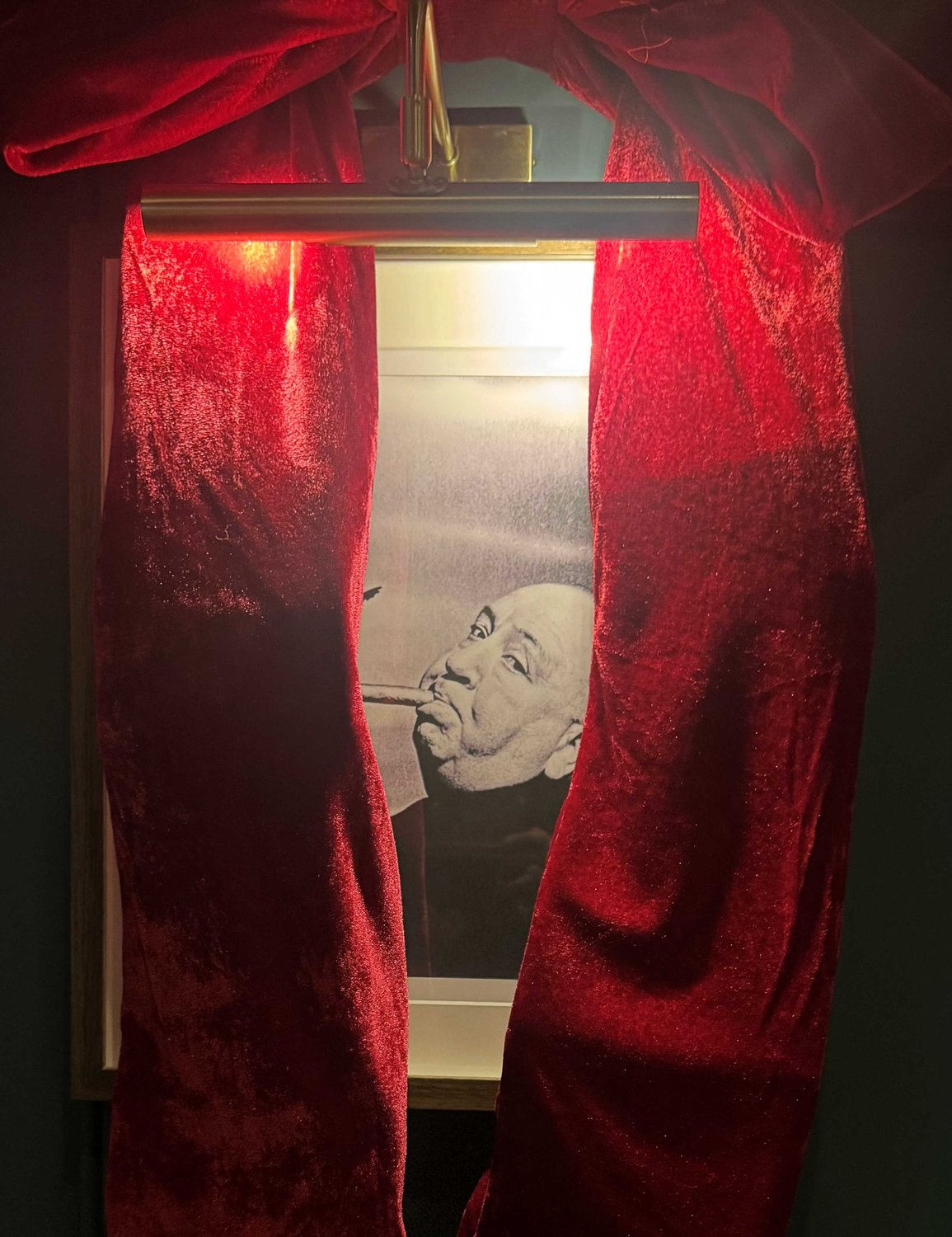
Saturday Night Dinner
Click on the images to enlarge
We then moved to The Plough in the High Street at Elstree for our final meal, and a well-chosen location it was; it had been Hitchcock's favourite pub.
We said our farewells on the Sunday morning before we departed for our various destinations. All agreed it had been a marvellous weekend.
Many thanks to all who attended for their contributions to making it another great event.
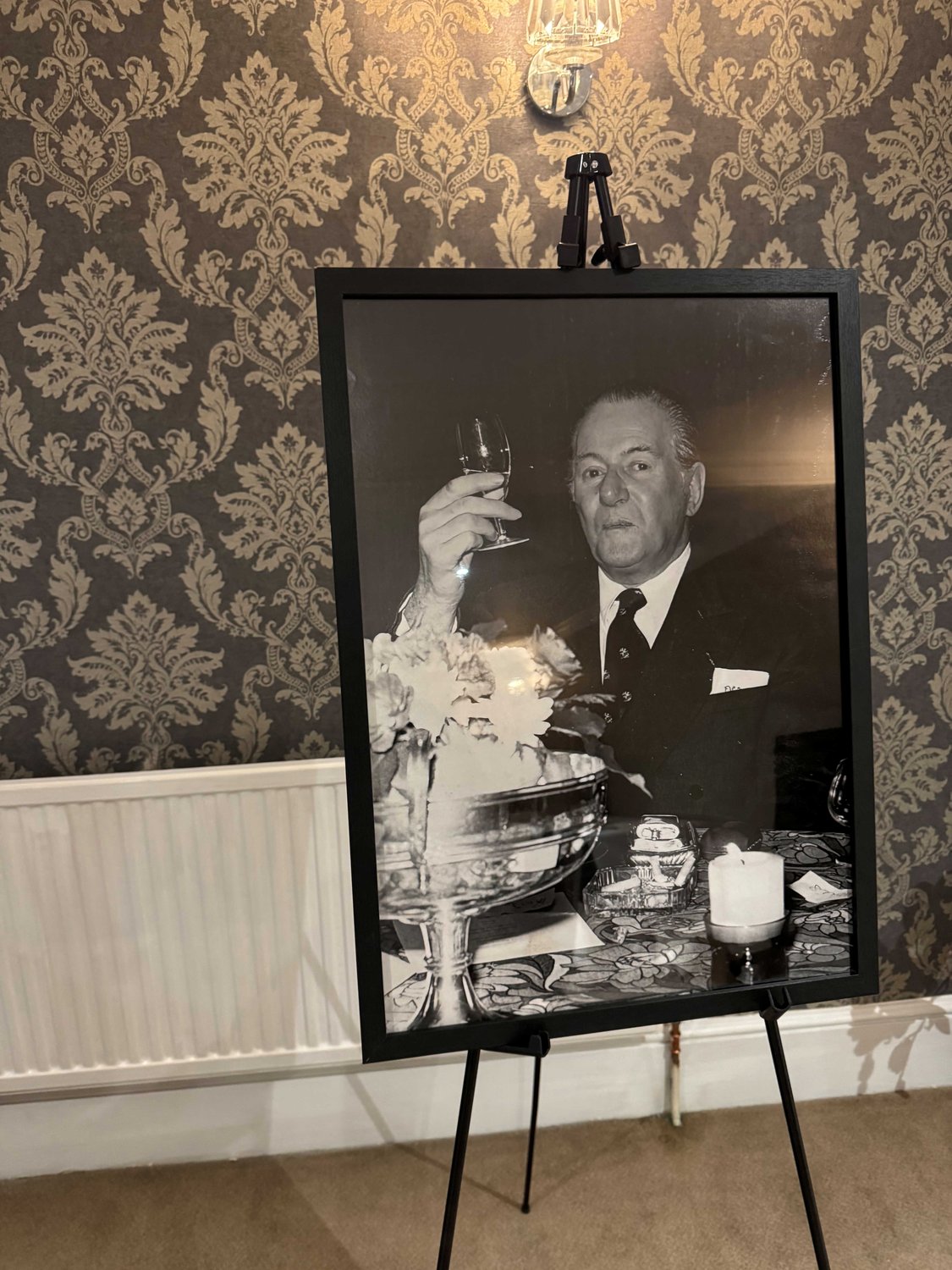
Click on the image to enlarge
C.B.
November 2026
This page last updated Copyright © 2002-2006 Bob Rothwell. 2007-2026 Charles Beck.